What Zone 9b Actually Means Here
Most of the Sacramento Valley floor sits in USDA Zone 9b, which describes winter cold and nothing else. It tells you a plant will probably survive our winter. It says nothing about surviving four straight months without meaningful rain, or a stretch of afternoons over 100 degrees, and those are the conditions that actually kill plants here.
The pattern that matters is the shape of our year: hot, bone-dry summers and cool, wet winters, with a delta breeze that cools evenings in some neighborhoods and never arrives in others. Elevation shifts it again. Yards in Loomis, Auburn, and El Dorado Hills run colder in winter and get harder frosts than Fair Oaks or Citrus Heights, which is why a tender subtropical that shrugs off January in one yard burns back in another twenty minutes up the hill.
Soil and Drainage Decide the List Before Style Does
Much of the valley and the lower foothills is heavy clay. It holds water for a long time in winter and sets up hard in summer. That combination is fatal to many of the drought-tolerant plants people reach for first. California natives like manzanita and ceanothus, along with lavender, rosemary, and most Mediterranean shrubs, do not die of drought here. They die of wet feet in February, or of summer irrigation sitting around their crowns in soil that never drains.
So the real decision is made below the surface. Plant those species on raised mounds or graded berms so water moves away from the crown, keep them off the same valve as thirstier plants, and resist the urge to dig a deep hole and backfill it with rich amendment, which in clay simply creates a bathtub. Higher in the foothills, where decomposed granite drains fast, the problem inverts: water moves through quickly, so plants need more frequent establishment watering and mulch matters even more.
Exposure Changes the Plant, Not Just the Water
A west-facing wall in August is a different climate than the north side of the same house. Add reflected heat off stucco, concrete, or a pool deck and you have a spot where plants rated for full sun still scorch. Those areas want genuinely heat-hardened material: agave, hesperaloe, olive, rockrose, westringia, and the tougher salvias.
North and east exposures, and beds under existing canopy, are where you can use the softer material that makes a yard feel lush rather than merely tolerant. Walk your yard in the late afternoon in July before you finalize a plan. The map of where shade actually falls at four o'clock is more useful than any tag on a nursery pot.
A Palette That Holds Up
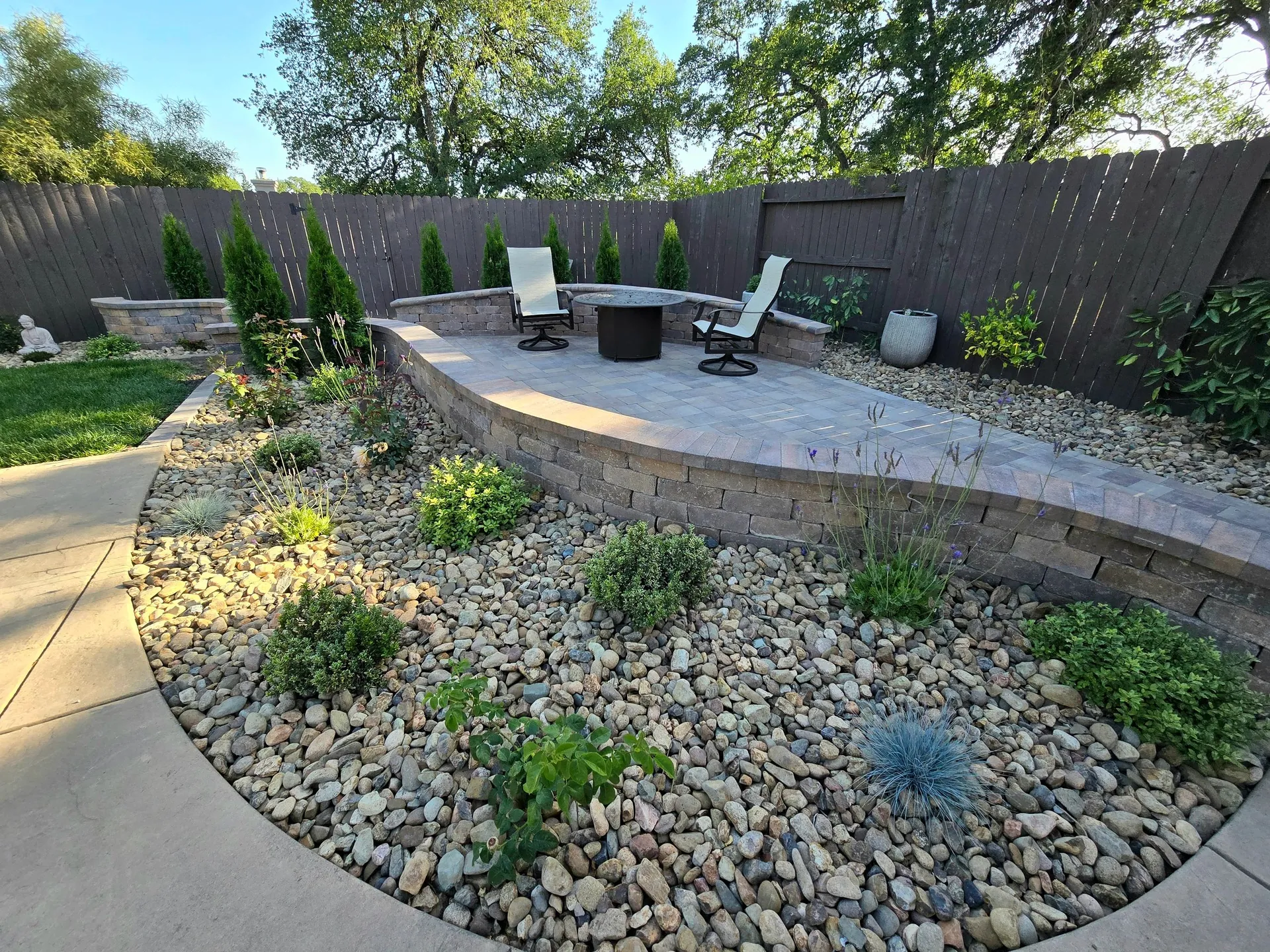
These are workhorses for this region: plants that take the heat, accept lean water once established, and still read as designed rather than merely surviving. Build in layers, and repeat a limited number of species instead of collecting one of everything.
- Trees: Chinese pistache for reliable fall color, crape myrtle for long summer bloom, western redbud where you want a native accent, fruitless olive and Arbutus 'Marina' for evergreen structure.
- Structural shrubs: westringia, rhaphiolepis, dwarf nandina, teucrium, and compact arctostaphylos where drainage genuinely allows it.
- Grasses: deergrass, muhly grass, Lomandra 'Breeze', and berkeley sedge for movement and softness with very little input.
- Perennials: salvia, agastache, yarrow, gaura, kniphofia, and daylily for long bloom windows and pollinator traffic.
- Accents: agave, aloe striata, hesperaloe, and yucca for year-round form where a bed needs a focal point.
- Shade and under-canopy: heuchera, evergreen currant, Douglas iris, and ferns on the north side or beneath established trees.
Spacing and Grouping Do the Maintenance Work
The most common planting mistake is spacing for how a bed looks the week it is installed. Plants set at half their mature spread look full immediately, then crowd, compete, and get sheared into meatballs by year three. Space at mature size, mass in odd-numbered groups, and use mulch to carry the bed visually while things fill in. Three inches of mulch, pulled back from trunks and crowns, moderates soil temperature, slows evaporation, and suppresses most weeds.
Group by water need and exposure so each irrigation valve serves plants that want the same thing. A yard planned this way needs less water, less pruning, and fewer replacements, because nothing is being forced to live on a schedule built for its neighbor.
Design Around What Is Already Established
If you have mature native oaks, they are the most valuable thing on the property and the easiest to kill with kindness. Valley and blue oaks evolved with dry summers. Regular summer irrigation and dense planting inside the root zone invite root disease, and grade changes or trenching under the canopy do damage that shows up years later. Keep irrigation and new planting outside the drip line, use a coarse mulch beneath the canopy, and design the wet parts of the yard elsewhere.
A good planting plan for this region is mostly a set of honest decisions: this soil, this exposure, this much water, this much maintenance. Get those right and the plant list almost writes itself. If you want help building a palette that suits your soil and how much upkeep you actually want, request a consultation and we will walk the property with you.
Reliable Landscaping & Design serves Roseville, Granite Bay, Loomis, Rocklin, Lincoln, El Dorado Hills, Cameron Park, Folsom, Orangevale, Fair Oaks, Citrus Heights, and Auburn.