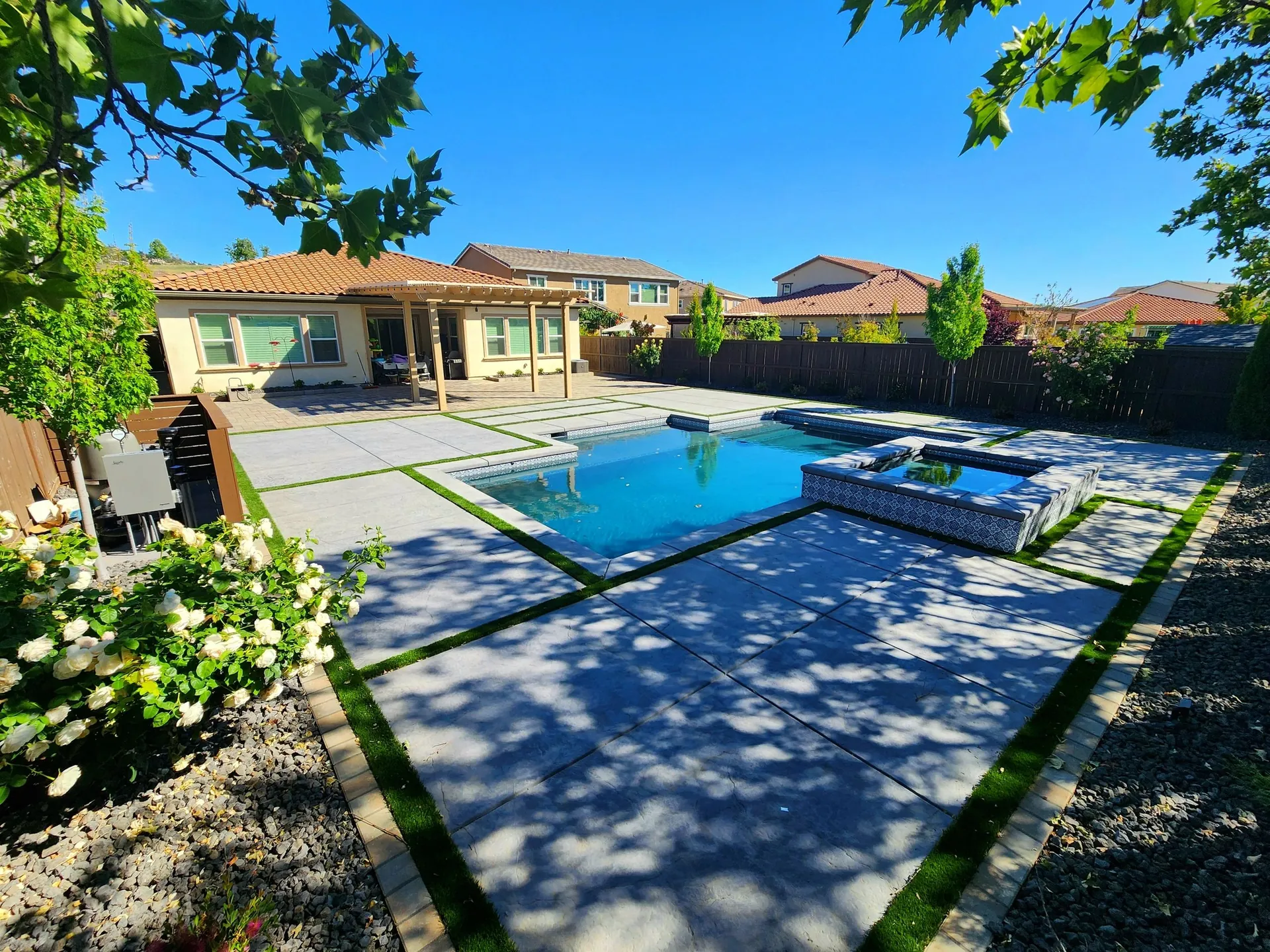
What Hardscape and Softscape Actually Mean
Hardscape is everything in a yard that does not grow: patios, walkways, retaining walls, pool decks, fire features, outdoor kitchens, and the gravel or decomposed granite between them. Softscape is the living layer: lawn, shrubs, trees, groundcovers, and the soil and mulch that support them.
Most homeowners treat these as two separate shopping lists. In practice they are one system. The paving decides where water sheds and where people walk. The planting decides how hot the paving gets and how much of the yard needs irrigation. The ratio between them is the biggest design decision in a backyard, and the hardest one to change later.
Why the Ratio Matters More in the Sacramento Valley
Our climate punishes both extremes. From June through September, Roseville, Folsom, and El Dorado Hills see long runs of afternoons above 100 degrees. A yard that is mostly concrete or pavers stores that heat and radiates it back after sunset, exactly when you want to be outside. A yard that is mostly lawn stays cooler, but with water rates climbing, a large lawn is an ongoing expense and a weekly chore.
Our soils push the same way. Much of Placer and eastern Sacramento County sits on heavy clay that swells when wet and shrinks when dry. Unbroken slabs on clay need proper base and drainage or they heave and crack. Planted ground gives winter rain somewhere to go. When nothing is permeable, every storm has to be handled by pipe, and that is where pooling and foundation trouble start.
A Practical Starting Ratio
There is no single correct number, but for a typical suburban backyard in our area most designs land between 40 and 60 percent hardscape, with the rest planted. Smaller lots in newer Rocklin and Lincoln neighborhoods run toward the high end because the space has to work hard. Larger Loomis and Granite Bay properties can carry more planting because the hardscape only needs to cover the zones people use daily.
The way to arrive at your number is not to pick a percentage. It is to size each hardscape element to its real job. A dining patio for six needs roughly 12 by 14 feet so chairs can slide out. A lounge area with a sectional needs about the same. A walkway needs 36 to 48 inches. Add those honest footprints together and the hardscape total takes care of itself. Everything left over should be planted, mulched, or left as permeable gravel, not poured because it was easier.
Where Hardscape Earns Its Keep
Hardscape is the expensive part of the project, so it belongs where it does the most work: directly off the back door, the route to the pool or spa, the kitchen and dining zone, and any slope that needs a retaining wall. These are places where turf or planting would fail under foot traffic and furniture anyway.
What goes under it matters just as much. On our clay soils a paver patio needs a compacted aggregate base, typically 4 to 6 inches for foot traffic and more for vehicles, over subsoil graded to fall away from the house at roughly 2 percent. Edge restraint and compacted joint sand keep the surface from spreading. Skip the base work and even a modest patio will dip and rock within a few winters.
Where Softscape Does the Heavy Lifting
Planting is where the yard gets its comfort and character. A deciduous shade tree on the south or west side of a patio cools the paving in August and lets winter sun through once the leaves drop. Shrub masses and ornamental grasses soften walls and walkways, hide fences, and buy privacy from neighbors who are often closer than anyone would like.
Softscape is also your drainage partner. Beds along the low side of a patio, mulched basins at downspouts, and planted swales let water soak in instead of running to the fence line. That means plants that handle wet feet in January and bone-dry August: manzanita, ceanothus, salvias, and deer grass do this reliably. Lawn should be sized for how it is actually used, not treated as the default filler. Density comes from layering, not from thirst.
- Shade trees on the west and south sides of hardscape
- Drip-irrigated shrub and perennial beds instead of spray-irrigated lawn
- Planted basins and swales where runoff naturally collects
- Lawn sized to real use, whether that is kids, dogs, or a view
Getting the Balance Right the First Time
The yards that age well are the ones where hardscape and planting were designed together, on one plan, before anything was dug. Grading sets the drainage. Drainage sets where paving and beds go. Paving is sized to furniture and traffic. Planting is chosen for the exposure each zone gets once the structures are in. Change that order and you get a patio that floods, a lawn nobody uses, or a tree whose roots lift the pavers in ten years.
If you are planning a backyard in Roseville, Folsom, El Dorado Hills, or anywhere in the Sacramento area and are not sure how much of it should be built versus planted, that is exactly what a design consultation is for. We walk the property, look at how water moves across it, and build the balance into the plan from the start. Request a consultation with Reliable Landscaping & Design and we will help you get the ratio right before the first paver goes down.