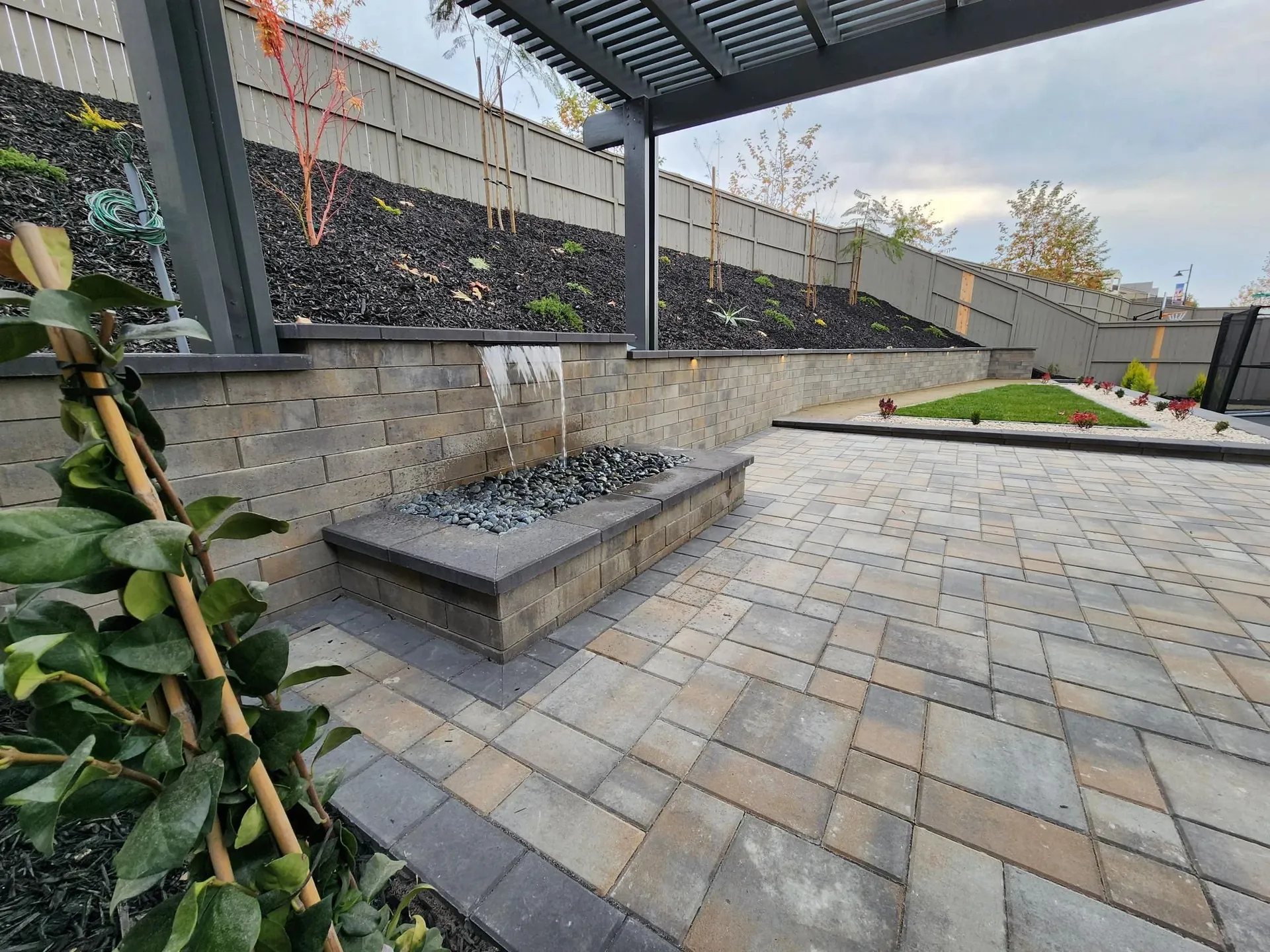
Why Fall Is the Most Productive Season Here
Fall is the quietest season in most Sacramento-area yards and the best one to work in. Soil is still warm from summer, the air has stopped punishing new plantings, and the winter rains that settle roots are still weeks out. Anything you correct now gets tested by a storm instead of by a 105-degree afternoon.
It is also the season that exposes shortcuts. Water finds every low spot and every patio built without a plan for runoff. A few focused hours in October prevent the standing water and settled pavers that show up in January.
Start Below the Surface: Drainage
Most of the valley floor from Citrus Heights through Roseville sits on heavy clay, and much of Placer and El Dorado County sits on clay over hardpan or decomposed granite. None of it absorbs water quickly. When an atmospheric river parks over the region, water does not soak in; it runs wherever your grading sends it.
Drainage systems also fail quietly. A basin silts up over the dry season, an outlet gets buried under mulch, and nobody notices until the yard is holding water. Check the whole path, not just the grates you can see.
- Pull every catch basin grate and clean the silt and bark out of the sump below it.
- Find each drain line outlet and confirm it daylights freely. Buried outlets are the most common failure we find.
- Run a hose into each downspout. No water at the outlet within a minute means a blocked or broken line.
- Confirm the soil still falls away from the house; settling and added mulch quietly flatten that slope.
- Clear leaves out of swales and dry creek beds so they carry water instead of damming it.
Dial Back Irrigation Without Starving Plants
Most controllers in this region are still running a July schedule well into October, when plants use a fraction of the water they did in August. Cut the number of watering days first and keep run times long enough to wet the full root zone, because shallow, frequent watering builds shallow roots.
Do not shut the system off at the first rain. One storm rarely wets clay deeply, and new plantings still need water between storms. Run each zone and watch it for broken heads, emitters clogged after a summer of hard water, weeping valves, and nozzles buried by grown-in plants. In the foothills, wrap the backflow assembly before the first hard freeze.
The Fall Planting Window
October and November are the best planting weeks of the year in Zone 9b. Soil is still warm enough for roots to grow, the air is cool enough that new plants are not fighting heat, and winter rain handles much of the establishment watering. A shrub planted in October enters its first summer with far deeper roots than one planted in May.
Plant into clay carefully. Dig the hole wider than it is deep, break the glazed sides, and set the root crown slightly above finish grade so the plant is not sitting in a bowl that holds water. Finish with two to three inches of mulch pulled back from trunks. Natives, Mediterranean shrubs, and most trees prefer fall installation; hold frost-tender subtropicals until spring.
Lawns, Beds, and Leaf Drop
If you have tall fescue, early fall is the time to core aerate and overseed while soil is still warm enough for germination. Aeration matters more here than in most places: compacted clay sheds water and starves roots of air, which is usually why a lawn thins in the same spots every year.
Stay ahead of leaf drop under valley oaks, liquidambars, and Chinese pistache. Leaves smother turf, and leaves washed into a catch basin are exactly what clogs a drain line during the first storm. Resist hard-pruning in fall, since late cuts push tender growth right as frost arrives.
Check the Hardscape Before the Rain Does
Walk your paving and look for joints that have lost sand, pavers sitting below their neighbors, and cracks that opened since spring. Top off joint sand while the surface is dry. Settling in one area is almost never a paver problem. It is a base or drainage problem showing itself, and a wet winter makes it worse.
Confirm retaining wall weep holes and wall drains are open and discharging somewhere useful. Clean and re-aim low-voltage lighting now that evenings are dark early. In foothill communities like Auburn, Loomis, and El Dorado Hills, fall is also the practical time to re-establish defensible space around structures.
If your yard pooled, eroded, or pushed water toward the house last winter, this is the season to fix the cause rather than the symptom. Reliable Landscaping & Design (CSLB #1101544) works throughout Roseville, Granite Bay, Rocklin, Folsom, Orangevale, Fair Oaks, and the surrounding Sacramento area. Request a consultation and we will walk the property with you before the rain does.