Why the order matters in the Sacramento Valley
Spring is short here. On the valley floor from Roseville to Folsom, the last light frost is usually gone by late February or early March, and the first run of 90-degree days often shows up before Memorial Day. Up the hill in Auburn, Cameron Park, and El Dorado Hills, frost lingers a few weeks longer and the window is tighter still. That leaves roughly ten to twelve weeks to get a yard ready for a summer it has to survive mostly on its own.
Most spring checklists start with the visible things: flowers, fresh mulch, a new patio set. We go the other way. Fix what is below the surface first, because everything you plant or build on top of it depends on water moving the right way. Then tune the systems that keep plants alive through August. Only after that do you spend money on what people can see.
If you are reading this in late fall or winter, that is actually the best time to be thinking about it. Lining up a design and a contractor now means the heavy work starts in February instead of May, when every crew in the region is already booked.
First: walk the yard after a rain and check drainage
Our winters do the inspection for you. After a solid storm, wait a day and walk the property. Standing water that is still there 24 to 48 hours later tells you the grade is wrong, the soil has compacted, or a drain is clogged. On the heavy clay that runs through much of Placer and Sacramento County, water does not soak in quickly. It has to be carried away, and if nothing is carrying it, it sits against your foundation, your patio base, or your plant roots.
Look at the foundation line, the low corners of the lawn, and the downhill edge of any patio or wall. Confirm downspouts discharge well away from the house and that drain grates are clear of leaves and silt. Pavers that have settled into a dip, or a retaining wall that is weeping at the base, are signs the base or the backfill drainage has a problem. These are cheap to correct in March and expensive to ignore until the next rainy season.
- Standing water 24 to 48 hours after a rain
- Downspouts dumping at the foundation or onto a patio
- Clogged area drains, catch basins, or drain grates
- Settled or heaved pavers and cracked concrete edges
- Erosion channels on slopes, especially in the foothills
Second: tune the irrigation before the heat does it for you
Irrigation sits idle or on a reduced schedule all winter, and that is when heads crack, valves stick, and drip lines get chewed or crushed. Turn each zone on manually and walk it while it runs. You are looking for geysers, heads that are tilted or buried, dry spots where emitters have plugged, and water hitting fences or hardscape instead of plants.
Then look at the controller. Reset the seasonal adjustment, confirm the rain sensor or weather-based controller is actually connected, and verify run times match the plant type in each zone. Lawn and shrub beds should never share a valve; they need completely different schedules. If you still have spray heads on planting beds, this is the time to convert them to drip. It is a small job in spring and a meaningful water savings by July.
Third: soil and mulch, then planting
Once water is handled, deal with the soil. Winter rain compacts clay and pulls fine material to the surface. Loosen the top few inches of planting beds where you can do it without cutting roots, and add compost rather than sand. Sand mixed into valley clay turns it into something closer to concrete. Go easy on fertilizer for established trees and shrubs; most of what grows well here needs very little.
Then mulch. Two to three inches of shredded bark or wood chip over the beds, held a few inches back from trunks and stems, does more for a Sacramento-area landscape than almost anything else. It slows evaporation, keeps roots cooler in August, and smothers the weeds the winter rain just germinated.
Plant last, and be honest about the clock. Spring is fine for most perennials, ornamental grasses, and anything from a container, but a plant that goes in during April has only a few weeks to root before the heat arrives. Larger trees and shrubs usually establish better when planted in fall. If you missed that window, choose heat-tolerant material, plant early in the season, and water deeply and less often to push roots down instead of out.
Fourth: refresh the hardscape and the details
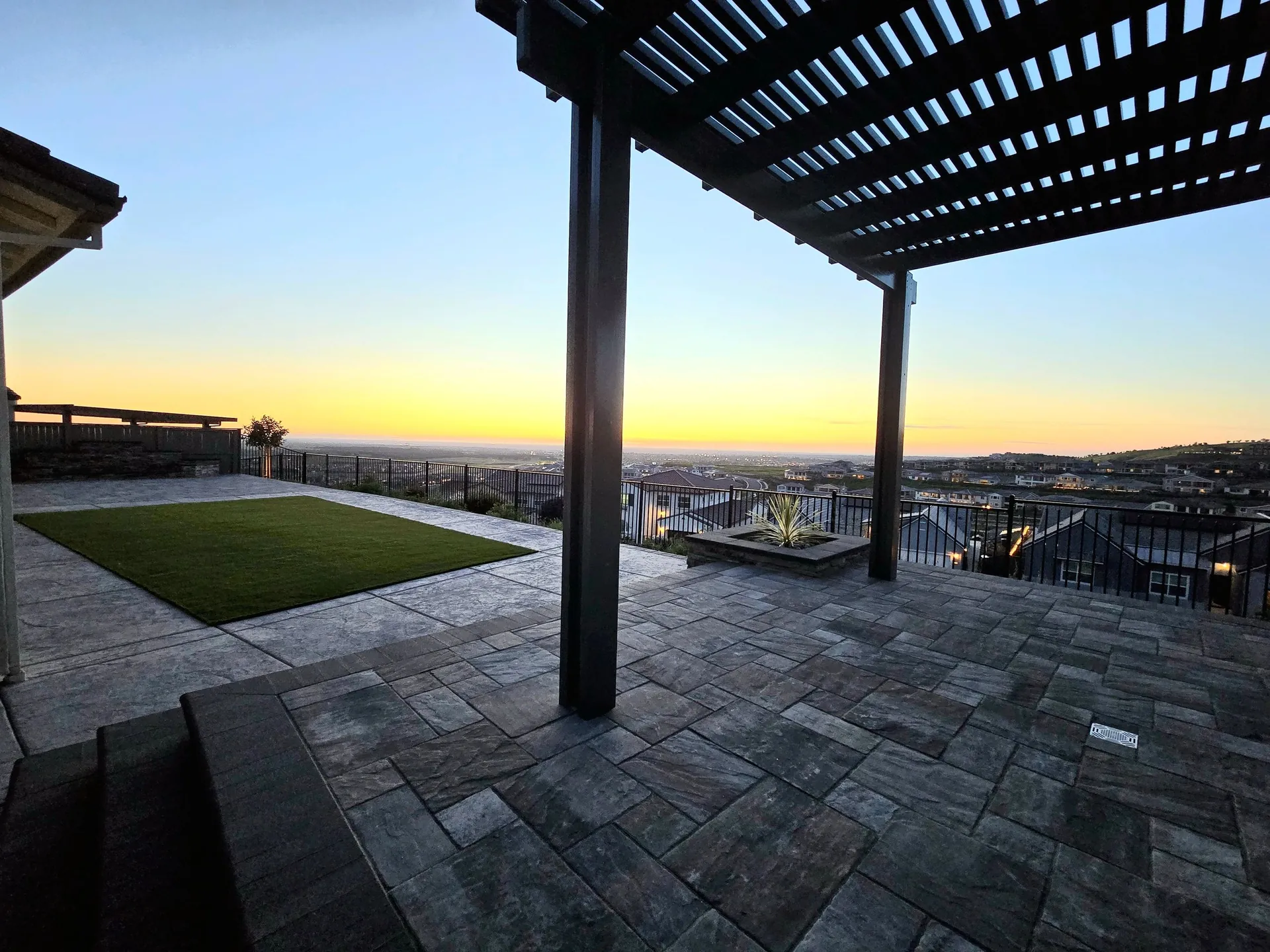
With the system work done, spring is the time to make the built parts of the yard look new again. Pressure wash patios and walkways, re-sand paver joints with polymeric sand, and reseal if the surface has gone dull or is absorbing water. Check pergola posts, deck ledgers, and fence posts at the base, where moisture does its damage, and probe anything that looks soft.
Walk the landscape lighting at dusk. Replace failed lamps, re-aim fixtures that got knocked around over the winter, and trim plants that have grown into the beams. Finally, reset the edges. A crisp line between lawn, bed, and paving is what makes an otherwise tired yard read as cared for.
If the inspection turns up something bigger than a weekend job, such as a grading problem, a wall that is moving, or an irrigation system that was never zoned correctly, it is worth fixing before the next project goes on top of it. Reliable Landscaping & Design (CSLB #1101544) works across Roseville, Granite Bay, Folsom, El Dorado Hills, and the surrounding Sacramento area. Request a consultation and we will walk the property with you and put the priorities in the right order.