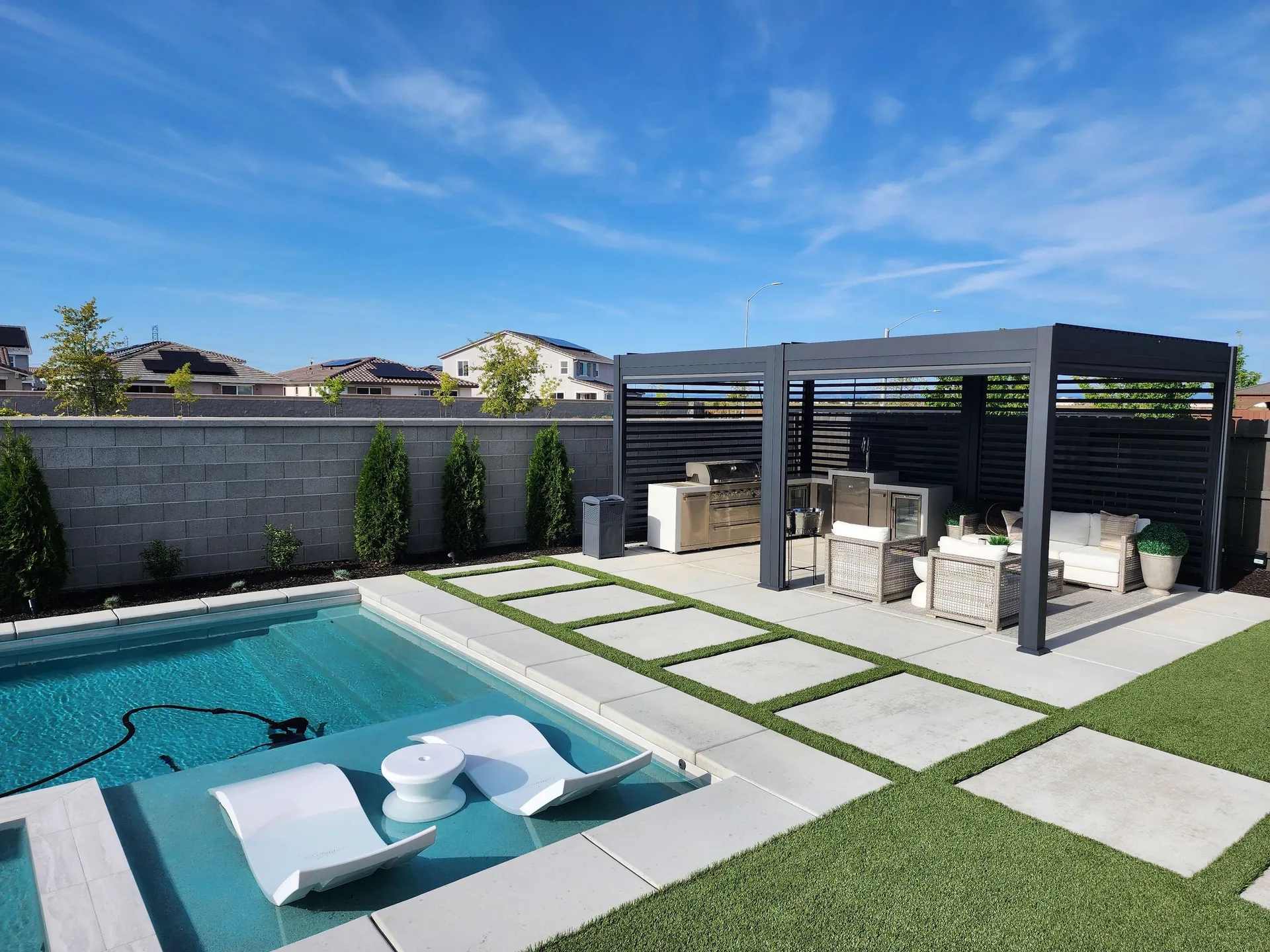
The real question isn't “turf or grass” — it's how you use the yard
Every Sacramento-area homeowner planning a yard eventually hits the same fork in the road: artificial turf or a natural lawn. With water rates climbing and summers regularly pushing past 100°F, it's a more consequential choice here than in milder climates.
The honest answer is that both can be the right call — it depends on how you actually live in the space, your tolerance for maintenance, and how the yard is built underneath. A lawn that's installed over poor soil and weak irrigation will struggle no matter what, and turf laid over an unprepared base will ripple, pool water, and look cheap within a season. The decision matters; the installation matters more.
Water, cost, and maintenance: the honest comparison
Over a multi-year horizon, the two options trade places. Natural lawn is cheaper to install but costs you every month in water, mowing, fertilizer, and reseeding. Artificial turf costs more up front but nearly eliminates water and ongoing maintenance, which is why payback often lands in the 5–7 year range for a typical Placer or Sacramento County lawn.
- Water: natural lawn is thirsty in summer; quality turf uses essentially none beyond occasional rinsing.
- Upkeep: lawn needs weekly mowing and seasonal feeding; turf needs an occasional brush and rinse.
- Up-front cost: sod/seed is far cheaper to install; turf is a bigger initial investment.
- Lifespan: a healthy lawn lasts indefinitely with care; premium turf typically lasts 12–15+ years.
Heat, pets, and kids: how each holds up
Natural grass stays cooler underfoot in direct sun and self-repairs, but it wears into bare patches in high-traffic play zones and pet runs. Artificial turf is pet- and play-friendly, drains quickly, and stays green through the worst of August — but lower-grade turf can get hot in full afternoon sun.
If summer heat on the surface is a concern, it's solvable: lighter-colored, higher-grade turf, shade from a pergola or trees, and good airflow all keep temperatures comfortable. Pairing turf with shade structures and water features is one of the most popular moves we make in heat-exposed Roseville and Folsom backyards.
Installation is what makes either one last
This is where most yards are won or lost — and it's the part homeowners never see. A natural lawn needs proper soil prep, grading for drainage, and an efficient, well-zoned irrigation system. Artificial turf needs an engineered base, compaction, and drainage so it stays flat and water doesn't sit beneath it.
Skip these fundamentals and you get the same result either way: pooling water, uneven surfaces, odor (with pets and poor drainage), and a yard that looks tired fast. Done right, both options stay clean, level, and good-looking for years.
- Grading that moves water away from the house and seating areas
- Compacted, properly-depthed base under turf; amended soil under sod
- Drainage built in before the surface goes down
- Efficient, zoned irrigation for natural lawns
Which is right for your yard?
Lean toward artificial turf if you want a low-water, low-maintenance, always-green space that handles pets and play — especially in a sunny, high-traffic backyard. Lean toward a natural lawn if you love the feel of real grass, have shade, and don't mind the upkeep and water.
Many of our favorite designs use both: turf where durability and water savings matter most, and natural planting or lawn where it adds softness. If you're weighing the options for a Roseville, Granite Bay, or Sacramento-area yard, we're happy to walk the site and recommend the right approach — and build it on a base that lasts. Request a consultation to get started.