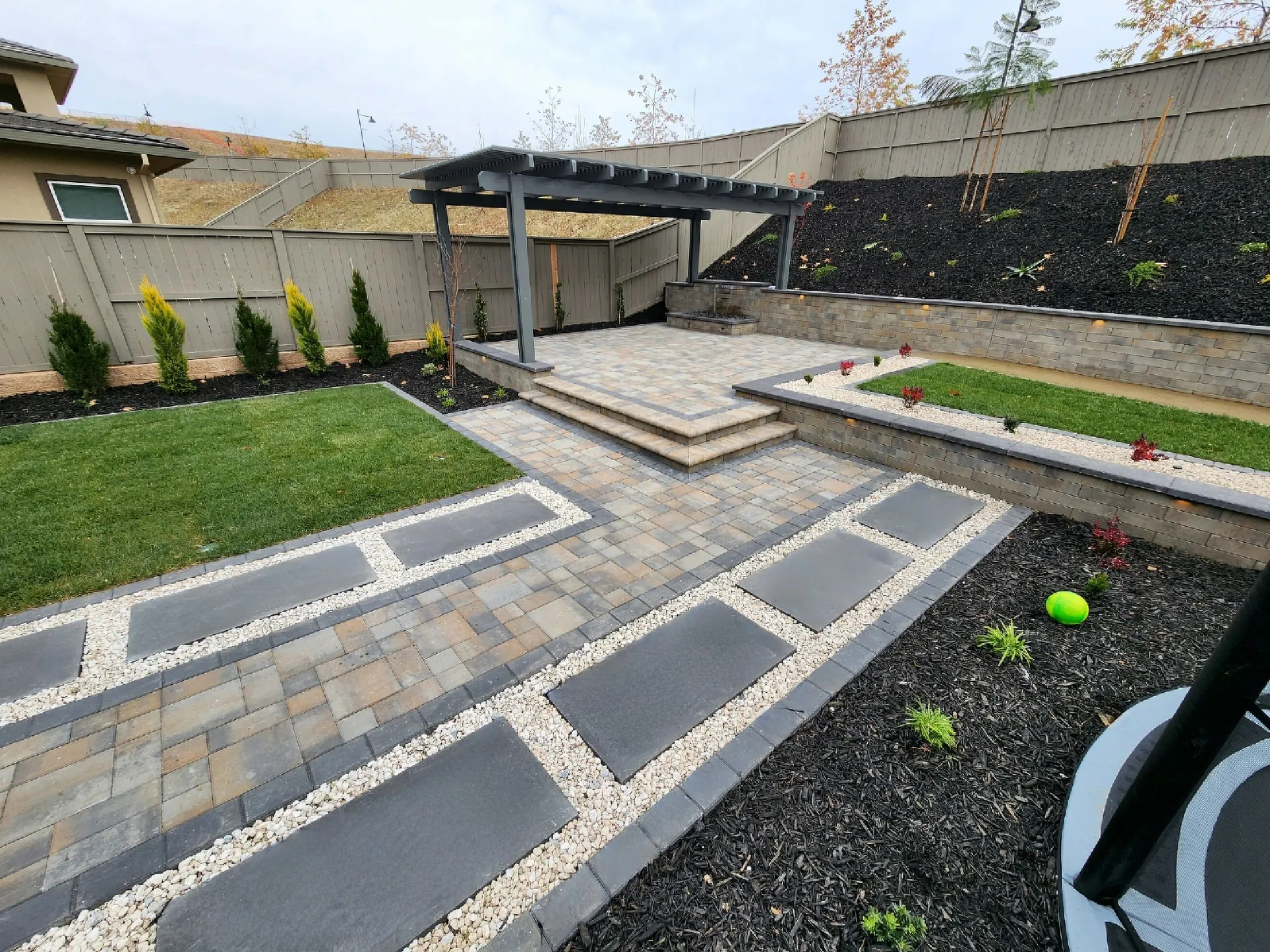
A backyard remodel is a sequence, not a single job
Homeowners usually ask "how long will it take?" expecting a number of construction weeks. The honest answer includes the weeks before anyone shows up with equipment. A backyard remodel is a stack of trades — demolition, grading, drainage, hardscape, irrigation, planting, lighting — run in a deliberate order, where each phase has to cure or pass inspection before the next can begin. For a typical mid-size Sacramento-area project, plan on roughly 8 to 14 weeks from a signed design to the final walkthrough. Larger builds that involve a pool, engineered structures, or significant grading run longer.
That range isn't padding. It reflects real cure times, material lead times, and the fact that the work below the surface — the part you never see — sets the pace for everything visible on top.
Weeks 1 to 4: design, engineering, and approvals
The schedule really begins at design. Before we price or build anything, we map the site: where water flows, how the grade falls, where utilities run, and how you actually want to use the space. A measured plan with elevations and drainage details takes a few weeks to develop and revise with you. Rushing this stage is the single most common way a project goes sideways later.
If your yard needs structural elements — a retaining wall over four feet, certain pergola footings, or anything tied to the house — engineering and permits enter here. In Placer and El Dorado County, and in HOA communities like Granite Bay, the smart move is to run approvals in parallel with design rather than after it. Submitting early keeps the calendar moving while drawings are finalized.
- Site assessment and measurements: a few days
- Design development and revisions: 1 to 3 weeks
- Engineering for walls or structures, when required: 1 to 2 weeks
- Permit and HOA submittals: started early so they run in the background
Procurement: ordering before the crew arrives
Once the design is locked, materials get ordered. Pavers, natural stone, specialty plants, lighting, and custom metal or wood can carry lead times of two to six weeks, and a single backordered item can stall an entire phase. Good scheduling means the base materials are on site or confirmed before demolition starts, not ordered the week they're needed. We sequence orders so deliveries land just ahead of each phase instead of holding up the crew.
The build: demolition, then the work that matters most
On-site construction follows a fixed order, and the early phases are the ones that decide whether the yard lasts. Demolition and excavation come first, then the unglamorous, decisive work: grading the site to drain, installing drainage lines and downspout tie-ins, and compacting a proper aggregate base. On the clay-heavy soils across Sacramento and Placer — which swell when wet and shrink when dry — base prep and drainage are what keep patios from heaving and settling years down the road. We won't shortcut them just to look faster.
Only after that foundation is right does the visible work go in: hardscape, irrigation, planting, lighting, and finishes. It feels like the project speeds up at the end, but that pace is only possible because the groundwork underneath was done correctly.
- Demolition and excavation: a few days to a week
- Grading, drainage, and base prep: 1 to 2 weeks — the foundation of the whole project
- Hardscape (patios, walls, walkways): 2 to 4 weeks, including cure time
- Irrigation, planting, lighting, and finishes: 1 to 2 weeks
- Cleanup and final walkthrough: a few days
What actually causes delays
Most delays trace back to decisions, not crews. The schedule slips when selections change mid-build, when a permit or HOA approval was started late, when weather interrupts concrete or grading, or when a material wasn't ordered with enough lead time. Sacramento's winter rains can pause excavation and concrete work for days at a stretch, which is why we build weather windows into the plan rather than pretending they don't exist.
- Late or changing material and design selections
- Permits or HOA approval started too late in the process
- Winter rain pausing grading, concrete, or compaction
- Long-lead materials ordered after the build had already begun
- Hidden site conditions — old footings, utilities, or poor soil — uncovered during demo
Planning is what keeps a schedule honest
A realistic timeline isn't about going fast; it's about going in the right order and not skipping the steps that protect your investment. When the design is thorough, approvals are in early, and materials are staged ahead of each phase, a backyard remodel moves predictably — and the finished space holds up for decades because the work beneath it was done right.
If you're planning a backyard project in Roseville, Granite Bay, Folsom, El Dorado Hills, or anywhere in the greater Sacramento area and want a clear, honest timeline for your specific site, reach out to Reliable Landscaping & Design at (916) 918-3990 to request a consultation. We'll walk your yard, map what it needs below the surface, and lay out a schedule you can actually plan around.