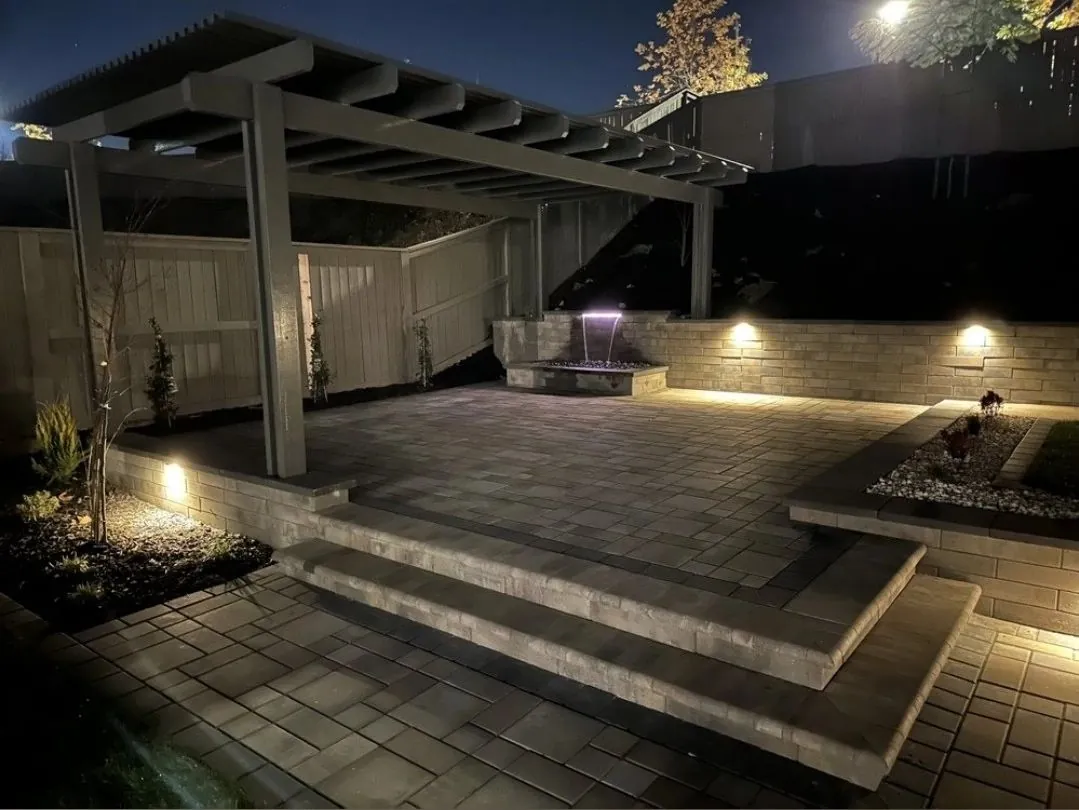
The problems you see usually start underground
Cracked pavers, a settling patio, soggy lawn spots, water against the foundation, plants that drown or dry out unevenly — these look like surface problems, but they almost always trace back to two things done poorly: grading and drainage.
It's the least glamorous part of a landscape and the easiest to cut corners on, which is exactly why so many beautiful-on-day-one yards fall apart within a couple of seasons. In our climate — dense clay soils across much of Roseville and Placer County, plus intense winter runoff in the foothills — getting water right isn't optional.
What grading actually does
Grading is the deliberate shaping of the ground so water flows where you want it to. The goal is simple but precise: move surface water away from your home, patios, and foundations, and toward drains or safe discharge points, without creating low spots where water collects.
Good grading also sets the elevations for everything built on top of it — patios, walkways, retaining walls, and planting beds. When grading is rushed, hardscape ends up at the wrong height, doors and steps don't transition cleanly, and water finds the weak point.
Drainage: moving water where it belongs
Where grading handles the surface, a drainage system handles the water grading alone can't. That's a coordinated plan — not a single trick — combining surface drains, subsurface lines, and proper routing of roof runoff.
- Surface drains and channel drains to catch water at patios and low points
- French drains and subsurface lines to relieve saturated soil
- Downspout connections that carry roof water away from the foundation
- Slope and discharge points planned to code and away from neighbors
The signs your yard has a drainage problem
You don't need to wait for a flood to know something's wrong. A few common warning signs tell us a yard needs grading or drainage work before any new hardscape or planting goes in:
- Standing water or soggy spots that linger a day or more after rain
- Water stains, efflorescence, or moisture along the foundation
- Pavers or concrete that have cracked, heaved, or settled unevenly
- Erosion, mulch washout, or bare channels cut into beds and slopes
- Mosquitoes and persistent muddy patches in summer
Why we plan drainage before anything else
On every project, drainage and grading come first — before we set a single paver or plant. The reason is durability: the most beautiful outdoor living space in the world won't hold up if the water underneath it isn't controlled.
It's also why our finished projects still look right years later. If your yard pools, cracks, or drains poorly — or you're planning a new patio, pool, or full backyard and want it built to last — we'll diagnose what's happening below the surface and design the fix into the project. Request a consultation and we'll take a look.