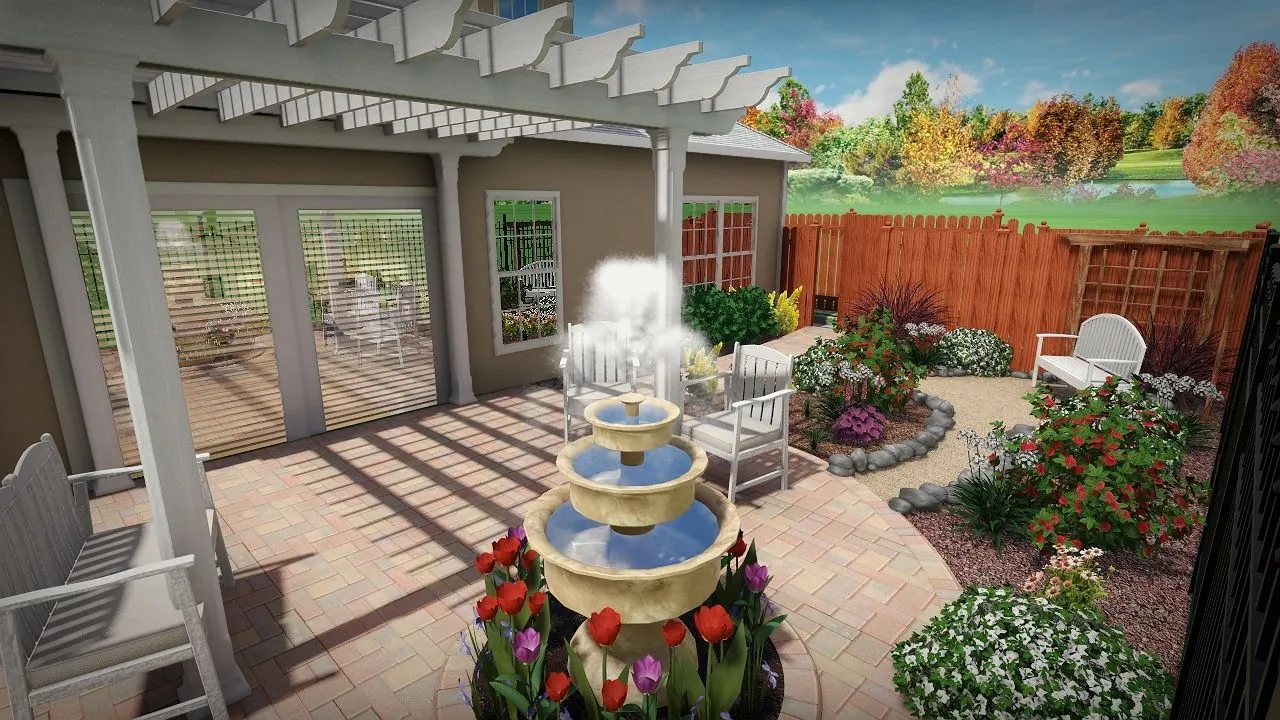
Mistake one: buying features before you have a master plan
The most common way a luxury backyard goes wrong is also the most expensive: building it in disconnected pieces. A patio goes in one year, a fire feature the next, an outdoor kitchen after that, each decided in isolation. The result reads as accumulated rather than designed, and worse, the pieces frequently fight each other, because the trench for the kitchen's gas line now runs under the patio that was finished last summer.
A master plan does not commit you to building everything at once. It commits you to building in the right order. With the whole vision on paper, a project can be phased intelligently so that buried utilities, drainage, and base work go in before the finished surfaces, and nothing already completed has to be opened up to install something that should have come first. Phasing without a plan is how homeowners pay to demolish their own recent work.
Mistake two: treating drainage as an afterthought
In a luxury backyard, the temptation is to spend the budget where it shows: the stone, the lighting, the cook space. Drainage shows nowhere, which is exactly why it gets shortchanged, and exactly why it is the failure that takes the most expensive features down with it. Water that is not deliberately managed will undermine a paver field, pool a beautiful patio, saturate a planting bed, and migrate toward the house.
Our regional soil makes this non-negotiable. The expansive clay across much of Roseville, Granite Bay, and the foothills holds water and moves as it wets and dries. A high-end backyard built on that soil without positive grading, area drains, and proper subsurface relief is a beautiful problem waiting for its first wet winter. Drainage is not the place to economize; it is the foundation that protects everything you did choose to spend on.
- Establish positive slope away from the home and all seating areas first
- Plan area and channel drains at patios and natural low points
- Route roof and downspout water away from new hardscape and the foundation
- Build subsurface relief behind retaining walls and under saturated zones
Mistake three: getting the scale and proportion wrong
Scale mistakes are quietly costly because they are rarely fixed; the homeowner just lives with a space that never feels right. A patio sized for a bistro table cannot host the dinner the homeowner imagined. An outdoor kitchen with no landing space beside the grill is unusable as a real cook station. A fire feature placed too close to seating drives people away instead of drawing them in.
Proportion is also what separates a luxury result from an expensive one. Generous, correctly sized circulation, seating zones that actually fit furniture and people, and sightlines that organize the yard are what make a space read as considered. These are design decisions that cost nothing extra to get right on paper and a great deal to correct in stone, which is the entire argument for resolving them before the build.
The reliable test is to lay it out at full size before anything is permanent. Marking patio edges, furniture footprints, and walkways on the ground, then walking the space and placing real chairs, exposes a cramped dimension long before a single paver is cut. A few hours with marking paint at the planning stage routinely prevents a five-figure regret that no amount of expensive material can fix later.
Mistake four: skipping HOA review and permits
In the planned communities common across Granite Bay, El Dorado Hills, Lincoln, and much of Placer County, exterior work typically requires HOA architectural review before it begins, and structures, gas lines, electrical, and significant grading require permits from the building department. Skipping either is not a shortcut; it is a liability that surfaces at the worst possible moment.
An HOA can require an unapproved structure to be modified or removed after it is built. Unpermitted work can stall a future home sale, complicate insurance claims, and force expensive retroactive correction. The cost of doing it correctly is mostly time and paperwork up front. The cost of skipping it is rebuilding finished work to satisfy a committee or an inspector after the fact, which is the kind of expense a luxury budget should never have to absorb.
The smarter sequence is to treat approvals as the first phase of the build, not a hurdle to clear later. A complete plan set with dimensions, materials, and drainage is what both the HOA committee and the building department want to see, and submitting one well-prepared package is far faster than the revision cycles that follow a vague or partial submittal. Front-loading the paperwork keeps the crew moving once they arrive instead of standing idle while an approval catches up.
Mistake five: choosing the contractor on price instead of structure
The final costly mistake is selecting the builder of a high-end backyard the way you might select a commodity, on the lowest number. A luxury project coordinates masonry, drainage, electrical, gas, irrigation, lighting, and planting, and the value is in how tightly those trades are sequenced. A fragmented, low-bid approach is where coordination gaps, change orders, and finger-pointing live.
A design-build structure keeps the plan and the construction answerable to one team, which is where expensive surprises get designed out rather than discovered. Reliable Landscaping & Design (CSLB #1101544) builds premium backyards this way deliberately, with drainage and sequencing resolved before the visible work begins and a single point of accountability through completion. If you are planning a high-end backyard and want to avoid the mistakes that quietly inflate these projects, request a consultation and we will start with the plan.