Design for the Dog You Actually Have
Most yards that look worn out after a year with a dog were never designed for one. The lawn gets a dirt track along the fence, a corner turns to mud every winter, and the planting beds become dig sites. None of that is the dog's fault. It is what happens when a yard is designed for how it looks on day one instead of how it will be used every day after.
A pet-friendly yard starts with honest observation. Where does your dog run? Where do they patrol the fence line? Where do they lie down in the afternoon, and where do they go to the bathroom? Those patterns are predictable, and a good design works with them rather than trying to retrain them with plants and hope.
The goal is a yard that reads as finished and intentional to guests while quietly absorbing the wear of a working dog.
Surfaces That Hold Up: Base Prep Matters More Than the Material
The surface a dog uses most needs to be durable, cleanable, and comfortable underfoot. Pavers, natural stone, and pet-rated artificial turf are the usual candidates, and each can work well. What separates a good result from a bad one is mostly what is underneath.
Across Roseville, Rocklin, Folsom, and much of the Sacramento area, native soils are often dense clay or decomposed granite over hardpan. Clay holds water and moves as it wets and dries, which is why poorly prepared turf ripples and pavers settle into dips that collect urine and rainwater. A properly excavated, compacted aggregate base, sized to the soil and the use, is what keeps a dog run flat and draining years later.
Heat is the other consideration. In a Sacramento summer, dark pavers and turf in full sun can get uncomfortably hot for paws in the afternoon. Lighter-colored stone, shade over the main lounging area, and placing turf where it gets some afternoon cover all make a measurable difference in how usable the space is in July and August.
- Pet turf: look for a permeable backing and a base designed to drain quickly, not just a layer of sand over native soil
- Pavers and stone: a compacted base and proper joint material keep units from shifting under running and digging
- Decomposed granite: attractive and natural, but it tracks indoors and can erode where dogs run hard, so use it in low-traffic zones
Drainage and Odor: The Below-the-Surface Problem
Lingering odor in a dog yard is almost always a drainage problem. If urine sits in the base or on top of compacted clay, it concentrates and the smell returns every warm afternoon no matter how often you hose it down.
The fix is designing the potty area to drain the way a shower pan does: a free-draining base, a slight grade toward a collection point, and somewhere for that water to go. In heavier clay, that can mean a gravel sump or a drain line tied into the yard's broader drainage plan. It also means placing the area where you can rinse it easily, with a hose bib close by, and away from patio seating and windows.
Getting this right at construction is far cheaper than tearing out turf or pavers later to fix a base that was never built to drain.
Plants That Survive Dogs and Keep Them Safe
Some popular landscape plants are toxic to pets. Sago palm is one of the most dangerous for dogs, and oleander, which is common in older Sacramento-area plantings, is toxic as well. Before you plant, check any species against the ASPCA's toxic and non-toxic plant lists and talk with your veterinarian if you have concerns about a specific plant.
Foxtail grasses are another local hazard. Their barbed seed heads can work into a dog's ears, nose, and paws, and they thrive in neglected corners and along fences in late spring. Keeping edges maintained and avoiding grassy volunteer areas reduces the risk.
For durability, put tough, resilient shrubs along fence lines where dogs patrol, raise or edge planting beds so they are clearly separate from run space, and keep delicate plantings to areas the dog cannot easily reach. A dog will usually follow a clear path if the design gives them one.
Zones That Look Designed, Not Fenced Off
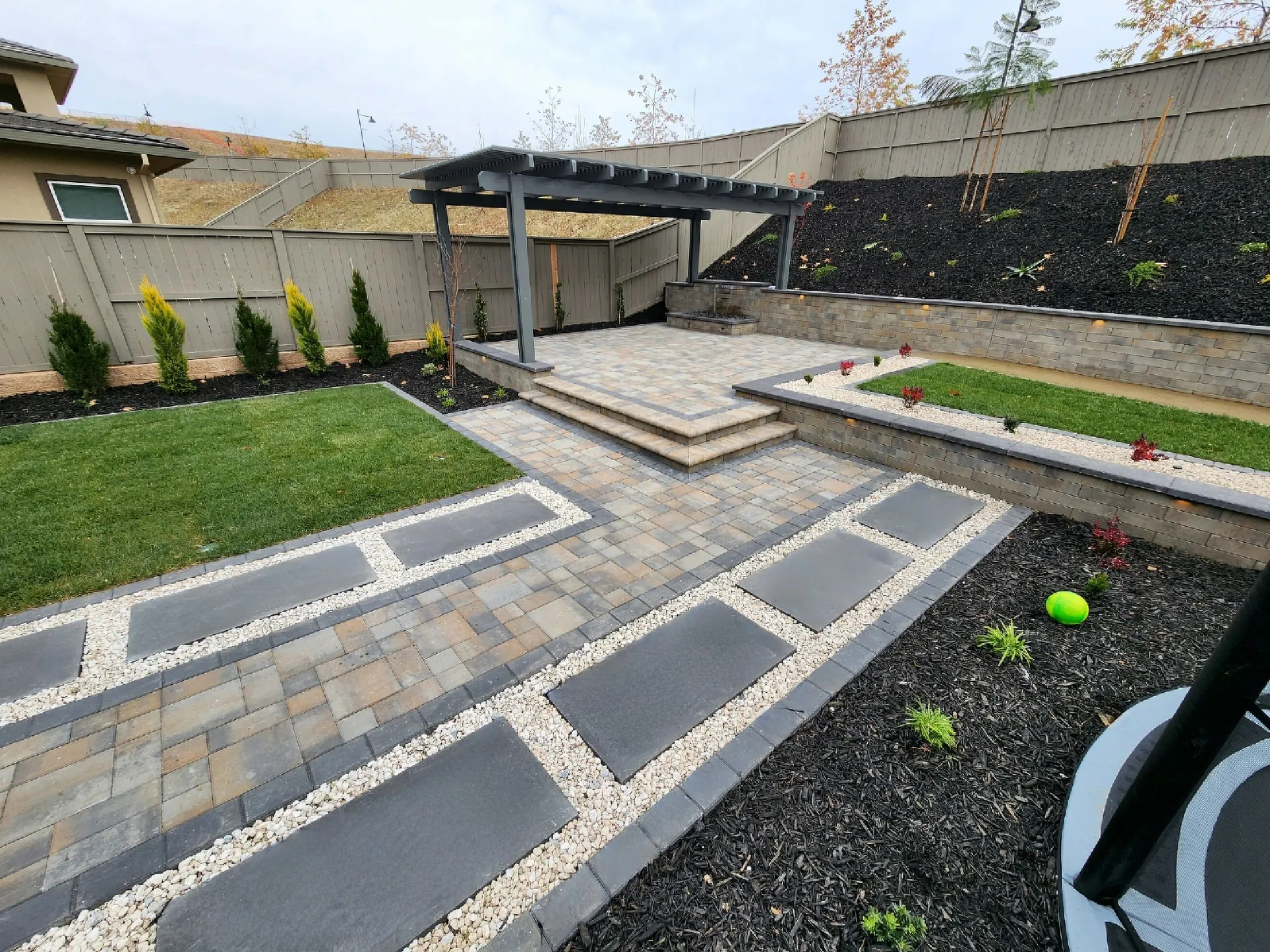
The difference between a high-end pet yard and a kennel is how the zones are defined. Instead of chain-link or temporary fencing, use the same tools that shape any good landscape: low walls, raised planters, a change in surface material, or a short run of decorative fencing that matches the house.
A dedicated run along a side yard can handle the wear while the main yard stays polished. A shaded patio corner gives the dog a cool place to lie near the family. A seat wall can double as a barrier that protects a planting bed. When those elements are planned together, the yard feels cohesive and nothing looks like an afterthought.
- Give the fence-patrol route a durable surface instead of fighting it with plants
- Provide shade and a water source near where the dog naturally rests
- Use material changes and low walls to define zones without blocking views
- Keep pools and water features secured with proper barriers
Planning Your Pet-Friendly Yard
A pet-friendly backyard is not a separate style. It is good landscape design that accounts for every member of the household, built on a base and drainage system that can handle daily use. When the work below the surface is done right, the finished yard looks clean, drains properly, and holds up for years.
If you are planning a new backyard or reworking one that is not surviving your dog, Reliable Landscaping & Design can help you plan durable surfaces, drainage, and layout that fit how you actually live. We serve Roseville, Granite Bay, Folsom, El Dorado Hills, and communities across the Sacramento area. Call (916) 918-3990 or request a consultation to get started.