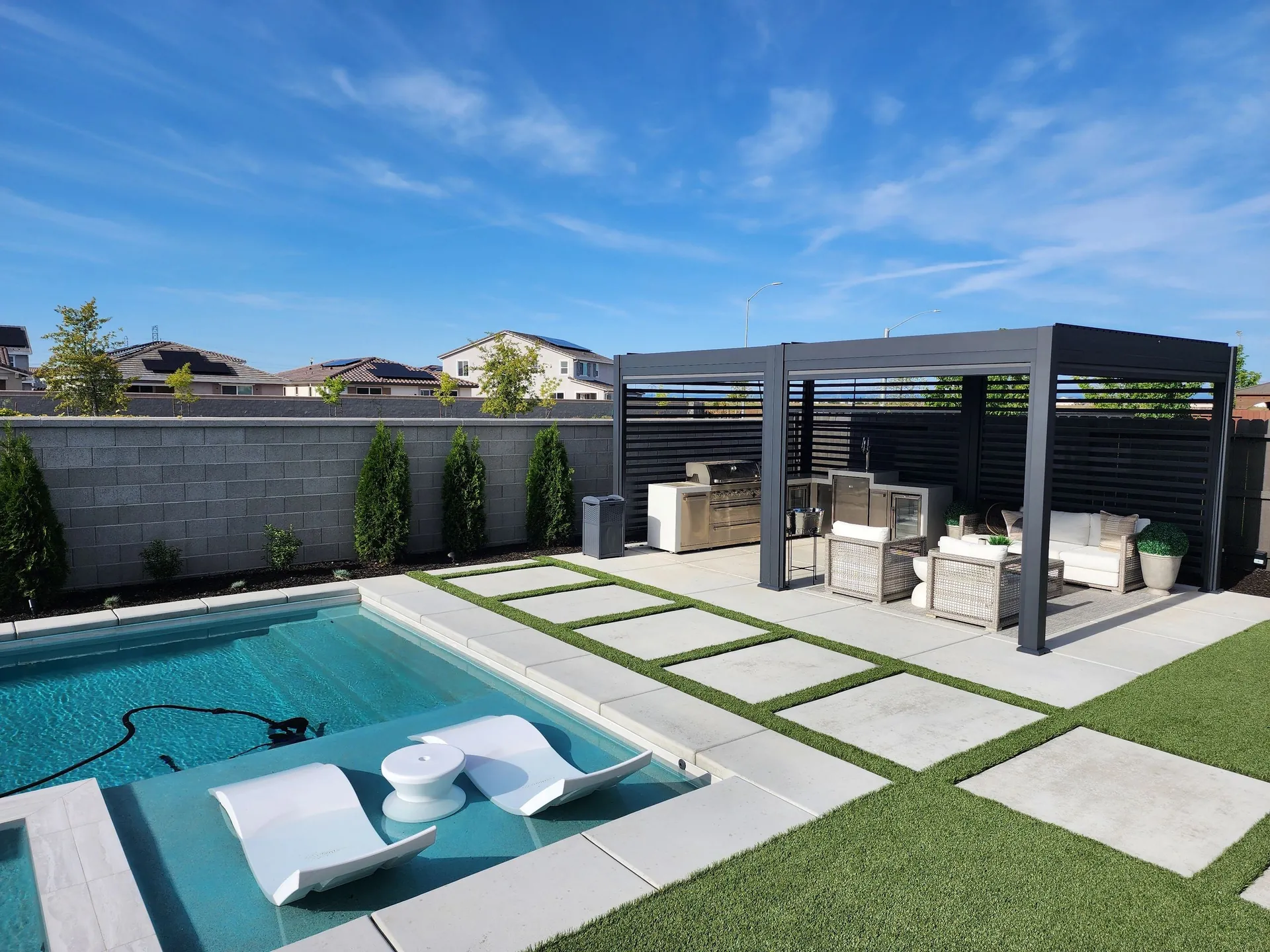
Phasing Is a Plan, Not a Pause
Most homeowners we meet in Roseville, Granite Bay, and El Dorado Hills want the whole yard done. Fewer want to write one check for it. Phasing is the honest answer to that gap, but it only works if every phase is drawn on a single plan before the first shovel goes in the ground. Building in stages without a master plan is not phasing. It is a series of unrelated projects that eventually collide.
The collision usually shows up as a demolition line item. A patio poured two years ago sits exactly where the gas line for the outdoor kitchen needs to run. A lawn goes in over the spot where a retaining wall footing belongs. A drain has to be trenched through finished paving because nobody decided where water was going. Every one of those gets paid for twice, once to build and once to tear out.
Draw the Whole Yard First
A master plan is a scaled drawing of the finished yard: grades, drainage routes, hardscape footprints, utility runs, planting zones, and lighting. It costs a small fraction of construction, and it is the document that makes phasing safe. Once it exists, the design can be sliced into stages that each stand on their own and still add up to the yard you approved.
The plan also settles elevations early, which matters more here than most people expect. Valley lots around Sacramento, Citrus Heights, and Fair Oaks tend to be flat with heavy clay that holds water. Placer and El Dorado County lots are often the opposite: decomposed granite over hardpan on a grade. Both situations demand that finish elevations and water routing get decided once, at the beginning, rather than renegotiated at the start of every phase.
Underground Work Belongs in Phase One
Anything buried, structural, or grade-defining should go in early, even when whatever sits on top of it is years away. This is exactly the work that gets cut first when a budget tightens, and it is the most expensive work to add back later.
- Drainage: French drains, area drains, downspout tie-ins, and swales that carry winter rain away from the foundation and off the future patio.
- Rough grading: bringing the yard to its final elevations so later phases do not require re-cutting and re-compacting finished areas.
- Sleeves and conduit: empty PVC under any future paving for irrigation, low-voltage lighting, gas, and electrical.
- Irrigation mainline and valve boxes: stubbed out to zones that do not exist yet.
- Retaining walls and footings: anything holding soil back or carrying the load of a structure you plan to build later.
Sequence Phases by Dependency, Not by Excitement
The natural instinct is to build the fun part first. The right order is the one where no phase damages or undoes the phase before it. In practice that means site prep and drainage, then hardscape and structures, then irrigation and planting, then lighting and finish details. Within each phase, work from the house outward and from the far corner back toward the access point so equipment is never driving across finished surfaces.
Access is the constraint homeowners forget. If the only route to the back yard is a five-foot side gate, then every phase that needs a skid steer or a material delivery has to happen before the side-yard paving, the new fence panel, and the gate hardware go in. We plan the machine route first and build over it last. On tight Rocklin and Folsom lots, that single decision can be the difference between a normal excavation and a week of wheelbarrows.
Sizing Phases to a Real Budget and a Real Calendar
A good phase leaves the yard usable and finished-looking on the day the crew drives off. That usually means grouping a hardscape element with the irrigation and planting immediately around it, rather than pouring all the concrete in year one and living with bare dirt for two summers. A common shape is two to four phases spread over a couple of years, with the design fee and the underground work carried in the first one.
Season matters here too. Fall and winter suit grading, drainage, and planting: the soil works well, and new plants root through the rainy months before their first real heat. Late spring and summer suit hardscape, structures, and lighting. Phasing along that calendar means each stage happens when conditions favor it instead of fighting them, which is its own kind of savings.
Where to Start
If you intend to build in stages, the first investment is the design and the second is everything below the surface. Get those two right and every later phase installs cleanly onto work that was already expecting it. Skip them and you are budgeting for demolition you have not been told about yet.
Reliable Landscaping & Design LLC (CSLB #1101544) is based in Orangevale and builds throughout Roseville, Granite Bay, Loomis, Rocklin, Lincoln, El Dorado Hills, Cameron Park, Folsom, Orangevale, Fair Oaks, Citrus Heights, and Auburn. If you would like a master plan drawn and then phased around your actual budget, request a consultation and we will walk the property with you and map out the sequence.