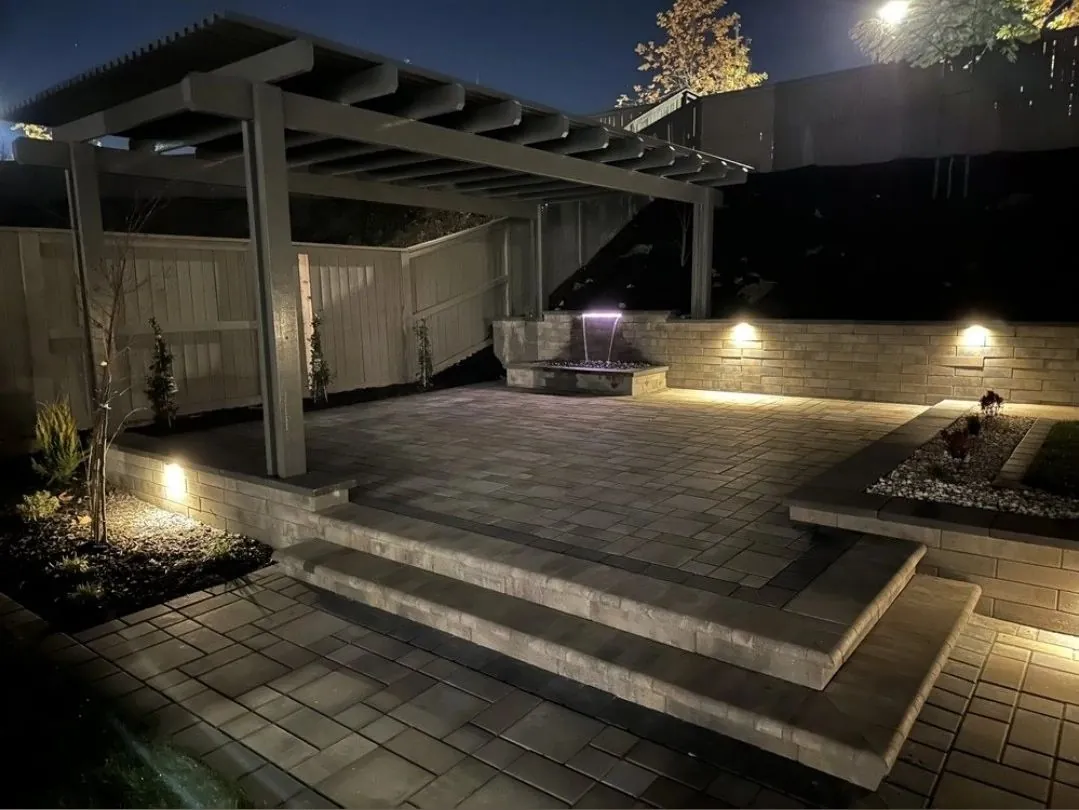
Why Three Paver Bids Can Be Three Different Numbers
Homeowners in Roseville, Folsom, and El Dorado Hills regularly show us paver patio quotes for the same square footage that differ by thousands of dollars. The pavers on top are rarely the reason. The spread almost always comes from what each contractor plans to do below the surface, how much excavation and compaction is in the scope, and whether drainage is being designed or ignored.
Understanding the pieces that make up the price is the only reliable way to compare bids, because a low number is usually a shorter scope, not a better deal.
Most of the Money Is Under the Pavers
Our local soils are the first cost driver. Much of Placer and Sacramento County sits on expansive clay that swells when winter rain arrives and shrinks hard through the dry summer. Set pavers on a thin base over that soil and you get heaving, settling, and wavy joints within a few seasons. Doing it right means excavating well past the finished grade, often eight to twelve inches or more depending on soil and use, then building the patio back up in controlled lifts.
That subgrade work is labor, hauling, and material you never see once the job is done, but it is where the durability lives. A proper section typically includes:
- Excavation to competent subgrade and off-haul of spoils, which gets expensive fast on clay that has to be dug by hand or machine
- Geotextile fabric over the subgrade to separate clay from the base so fines cannot migrate upward
- Compacted Class II aggregate base placed in lifts, each one compacted with a plate compactor and checked for grade
- A thin, screeded bedding layer of sand and a continuous edge restraint so the field cannot spread
- Polymeric joint sand swept and activated so joints lock up and resist weeds and ants
Size, Access, and Site Conditions
Square footage sets the baseline, but the per-foot price drops as the patio grows because mobilization, equipment, and setup are spread across more area. A small 200-square-foot landing is often more expensive per foot than a 700-square-foot entertaining patio.
Access matters just as much. A yard with a wide side gate lets us bring in a skid steer and move pallets of base rock and pavers efficiently. A yard behind a narrow gate, a pool, or an existing structure means wheelbarrows and hand digging, which can add days of labor. Slopes, old concrete to demolish and haul, tree roots, and buried irrigation or utility lines all add real cost that an honest estimator will walk the site to identify before quoting.
Where Drainage Fits in the Budget
A patio that collects water against the house or ponds in the middle is a failed patio, no matter how good the pavers look. Every patio we build is set to a positive slope away from the foundation, usually a minimum of a quarter inch per foot, and the surrounding grade is shaped so runoff has somewhere to go.
On flat lots in Rocklin, Lincoln, and Citrus Heights, that can mean a channel drain along the house, catch basins tied to a solid drain line, or a French drain at the low edge. These items are often the first thing a low bid leaves out, and they are the difference between a patio that handles a heavy January storm and one that sends water toward your stem wall.
Material Choices and Pattern Complexity
Paver cost varies by manufacturer, thickness, texture, and color blend. Standard concrete pavers sit at the lower end, while slab-style porcelain and natural stone such as travertine or bluestone cost more per square foot and demand more precise installation.
Pattern and layout also affect labor. A simple running bond is fast to lay. Herringbone, multi-size ashlar patterns, soldier-course borders, inlays, and curved edges all require more cutting, more waste, and more skilled time on the saw. That should show up as a line item you can see rather than a surprise.
Why the Cheapest Bid Usually Costs the Most
The shortcuts that make a paver bid cheap are predictable: shallow excavation, a few inches of base instead of a full section, no fabric, no edge restraint, and no drainage plan. The patio looks fine on the day it is finished. The problems arrive after the first wet winter and the first hot summer, when the clay moves and the pavers follow. Fixing a settled patio means pulling it up and rebuilding the base, which costs more than building it correctly once.
When comparing quotes, ask each contractor for the excavation depth, the base material and total compacted thickness, whether fabric and edge restraint are included, how water will be handled, and whether the price covers permits and off-haul. A licensed, insured contractor who answers those questions plainly is giving you a number you can trust. Treat any quote that is far below the others as a reason to ask what was left out.
If you are planning a paver patio in Roseville, Granite Bay, Folsom, El Dorado Hills, or anywhere in the Sacramento area, we are glad to walk your site, explain exactly what your soil and layout require, and put together a clear, itemized proposal. Request a consultation and we will show you where every dollar goes.