Why 'it depends' is the honest answer, and what it depends on
Every cost in this guide is an illustrative range for the greater Sacramento and Placer market, not a quote. Landscape pricing is custom by nature because no two sites present the same soil, slope, access, or material choices, and any of those variables can move a number by half or double it. What follows is meant to give a homeowner a realistic frame of reference before the first conversation, not a price tag.
The honest version of 'it depends' is specific. It depends on how a crew and material get to the work area, on whether existing hardscape has to be demolished and hauled off, on how much the site has to be re-graded, on the grade of material selected, and on what permits and HOA submittals the project triggers. Hold those five factors in mind and most of the variation in any estimate becomes legible.
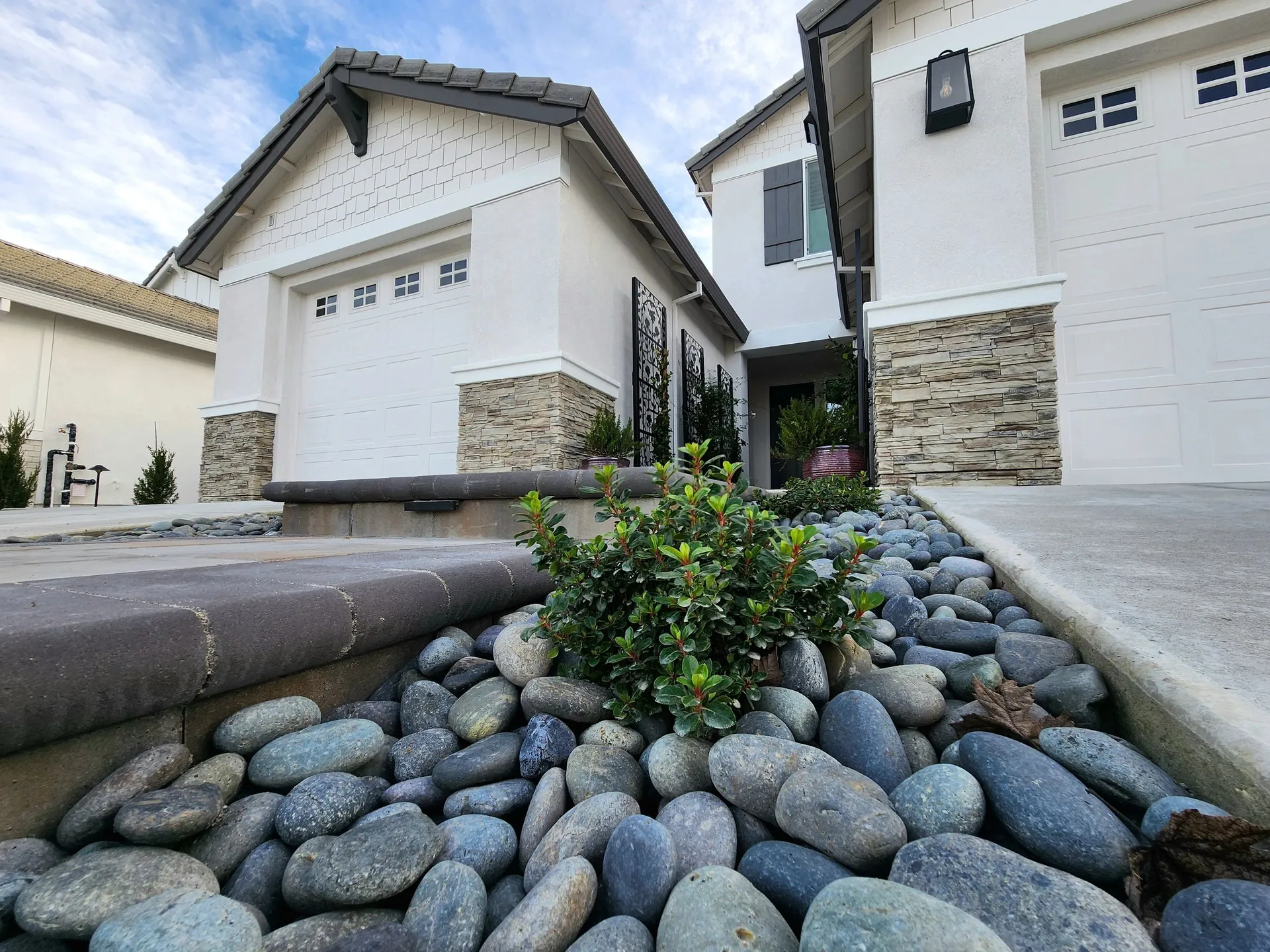
Front-yard refresh and planting
A front-yard refresh is the most common entry point and the most variable, because 'refresh' means very different things to different homeowners. A clean-and-replant project, removing tired material, amending soil, installing new plants and mulch, and tuning the irrigation, is a relatively contained scope. A full conversion that adds hardscape, a new walkway, lighting, and a drip system is a different animal.
As an illustrative range, a meaningful front-yard refresh in this market often falls somewhere from the mid four figures into the low five figures, with low-water conversions that add hardscape and lighting moving higher. The single biggest swing factor is whether you are replanting an existing layout or re-grading and rebuilding it.
- Soil amendment and quality planting carry more of the cost than the plants themselves
- Drip irrigation and a controller upgrade are common add-ons that pay back in water savings
- Low-water conversions can qualify for water-agency rebates in parts of the region; confirm current programs
Patios, walkways, and the hardscape backbone
Hardscape is usually the largest single line item in a backyard, and it is where base preparation quietly drives the price. As illustrative ranges for this market, an installed paver patio commonly runs about 18 to 35 dollars per square foot, poured concrete somewhat less depending on finish, and natural stone meaningfully more. Those numbers assume proper base depth and compaction, which is exactly what separates a lasting surface from one that settles.
Two factors move hardscape pricing more than material choice. The first is access: if a crew cannot get a skid steer to the backyard and has to wheelbarrow base and demolition through a side gate, labor climbs significantly. The second is what is already there. Demolishing and hauling off an existing slab adds cost before the new work even begins, often a few hundred dollars per debris-box load.
Walkways follow the same logic but at a smaller scale, and they are easy to under-budget. The temptation is to treat a path as an afterthought, but a walkway carries the same base, edge, and drainage requirements as a patio, just in a narrower footprint. Skimping there produces the same settling and heaving in clay soil, which is why a connecting path built cheaply often becomes the first thing that fails in an otherwise solid backyard.
Outdoor kitchens, pools, and full transformations
At the high end, the ranges widen because the systems involved multiply. An outdoor kitchen is not just a grill; it is masonry, countertops, gas, electrical, and sometimes water and drainage, which is why a built-in outdoor kitchen commonly spans a wide illustrative range from roughly the low five figures for a compact build into the mid five figures and beyond for a full appointed cook space.
A pool environment, meaning the pool plus the surrounding decking, drainage, lighting, and planting that make it usable, is typically the largest project a homeowner undertakes and often reaches well into six figures once the full setting is built rather than just the shell. A complete backyard transformation that combines hardscape, an outdoor kitchen or fire feature, lighting, irrigation, and planting commonly lands in the mid five to six figures depending on size and finish level. These are illustrative ranges; a real number requires a real site visit.
- Built-in outdoor kitchen: illustrative low-five-figures into mid-five-figures, feature-dependent
- Pool environment with full surrounding setting: frequently six figures all-in
- Full backyard transformation: commonly mid-five to six figures by scope and finish
- Low-voltage lighting and zoned irrigation are smaller line items with outsized impact on how the space lives
The costs that hide outside the materials line
The numbers above cover the visible work. Several real costs sit outside it and belong in any honest budget. Design fees for a substantial project commonly run from a few thousand dollars and up. Permits apply to structures, gas, electrical, and significant grading. HOA architectural review, common across the region's planned communities, adds time and sometimes revision cycles. And change orders, the costliest dollars in any project, are what you pay when a decision moves from paper to the field mid-build.
Building a realistic budget means carrying a contingency, typically around 10 to 15 percent, for the things a site reveals once work opens up, particularly drainage and soil surprises common in our clay. Reliable Landscaping & Design (CSLB #1101544) prepares itemized estimates that separate these costs out so homeowners can see exactly where the money goes. To turn these ranges into a real number for your property, request a consultation.