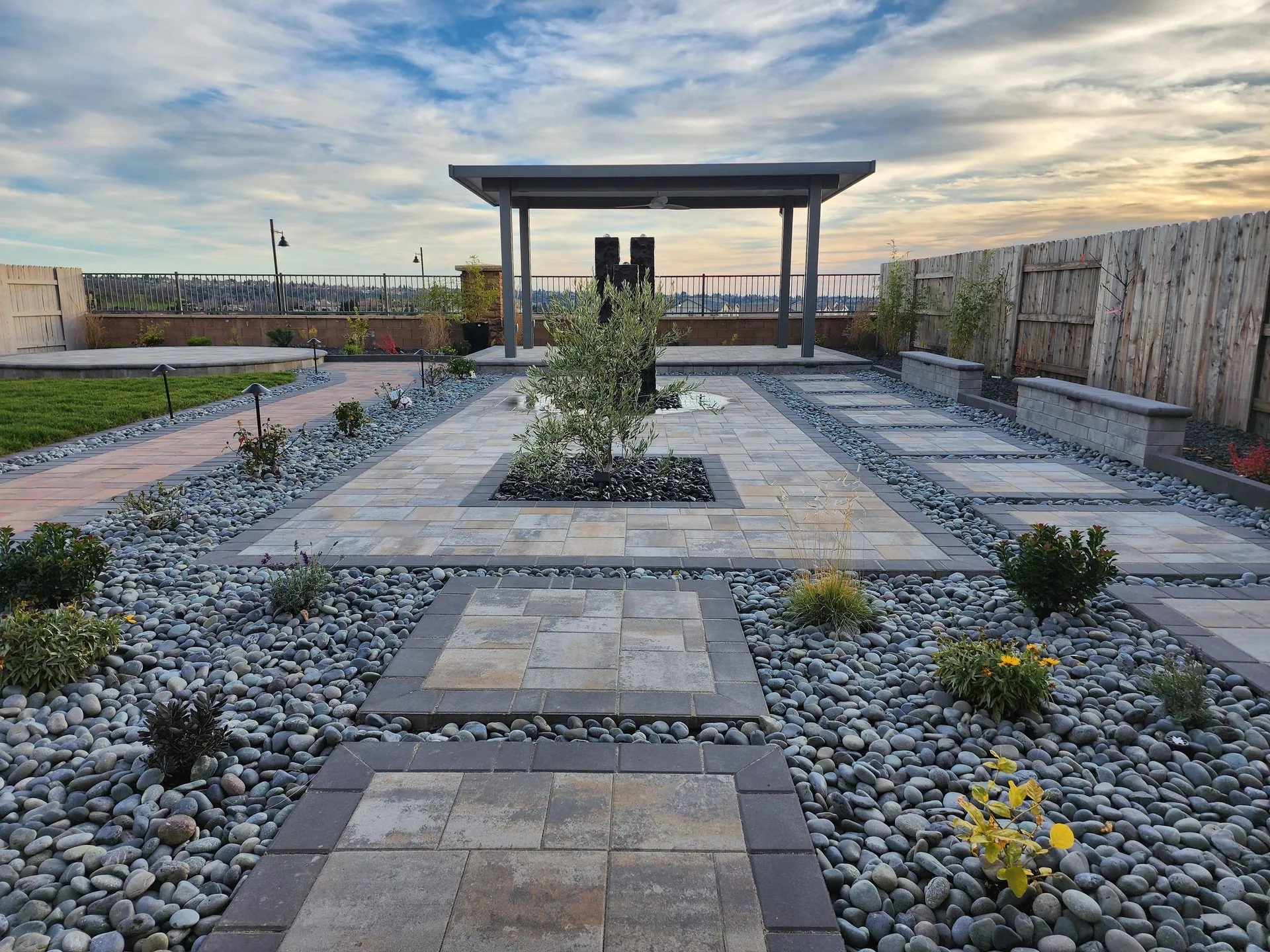
The test: would you cancel the trip to stay here?
There is a useful question to ask before spending anything on a backyard: on a given Saturday, would you rather be here or somewhere else? Most yards quietly lose that contest. They are pleasant to look at from the kitchen window and rarely used past that. The yards that win it have something in common, and it is not a single hero feature. It is that they were designed around the actual rhythm of a day at home.
Morning coffee wants a spot that catches early light and stays cool. A weekday dinner wants a table close enough to the kitchen that carrying out food is effortless. A Friday evening with friends wants a gathering area with warmth and soft light. A hot July afternoon wants shade and water. A yard worth staying home for accommodates all of those without anyone having to drag furniture around or retreat indoors.
That is a design problem before it is a budget problem. Get the use right and even a modest yard outperforms an expensive one that was assembled feature by feature.
Zone the yard around moments, not features
The most reliable way to design a yard people actually live in is to map it by activity. Rather than asking whether to add a fire pit or a pergola, start by listing the handful of things you want to be doing outside and give each one a place: a dining zone, a lounge or conversation zone, a cooking zone, perhaps a quiet corner, and a play or open zone for kids and pets.
Once those moments have homes, circulation between them becomes the design. Clear, comfortable paths, generous enough that two people pass without stepping onto planting, are what make a yard feel effortless. A common mistake is to oversize one giant patio and call it done; the result is a flat, undifferentiated slab where nothing feels intimate. Breaking the same square footage into linked zones, each scaled to its purpose, makes the whole yard feel larger and more inviting.
Grade and sightlines matter here too. On the sloped lots common in Loomis, Granite Bay, and the El Dorado foothills, a change in level can separate a dining terrace from a lower lounge in a way that feels intentional rather than leftover.
Comfort engineering for real Sacramento weather
A yard is only worth staying home for if it is comfortable across the weather you actually get, and the Sacramento region serves up a wide range: triple-digit afternoons in summer, cool evenings even after hot days thanks to the Delta breeze, and a genuine rainy season from late fall through early spring. Designing for the calendar, not the photo shoot, is what keeps a yard in use.
Heat is the first constraint. Shade structures, whether an open pergola for dappled light or a solid patio cover for full relief, plus shade trees and the cooling presence of water, are what make midday usable from June through September. Then comes the evening swing. Because nights cool off quickly here, a fire pit, a fireplace, or radiant heaters routinely turn a space that would empty out at dusk into the most-used spot in the yard, stretching the season into spring and fall.
Rain is the constraint people forget. A covered section, even a small one, means the outdoor room stays usable through a Placer County winter instead of going dormant for four months. Pair that with the drainage and grading that keep the patio from puddling, and the yard works in January, not just July.
The details that pull people outside
Beyond zones and comfort, a handful of sensory details do the quiet work of drawing people out the door and keeping them there. None of them is expensive on its own; together they change how a space feels.
Lighting is the biggest lever. Layered low-voltage LED, soft uplights on a tree, warm path and step lights, a gentle wash on a wall, turns a yard that goes black at sunset into a place you want to linger past dark. The presence of water, even a small pondless feature, adds sound that masks the neighborhood and signals calm. And the small ergonomic things, a side table within arm's reach of every seat, weatherproof outlets where you actually need to charge a phone or plug in a speaker, a hose bib near the kitchen, are what make a yard easy rather than fussy.
- Layered LED lighting so the space lives after dark, not just in daylight.
- Moving water for sound and calm; pondless designs keep it water-wise.
- Side tables, weatherproof outlets, and reachable surfaces at every seat.
- A clear path from the kitchen so meals move outside without friction.
Build it to last so it stays the place you choose
A yard only keeps winning the stay-home test if it still looks and works as intended several years in. That durability is built underneath, in the grading that moves winter water away from the patio and foundation, the properly compacted base under pavers and stone so nothing heaves or settles, the efficient drip and smart irrigation that keeps planting alive through drought rules without waste, and the materials chosen to take Sacramento sun and rain without fading or failing.
Those are the parts no one photographs and the parts that decide whether a backyard ages into a retreat or a list of repairs. Designed and sequenced together, they let the visible space, the patio, the planting, the lighting, the water, hold its character for a decade or more.
If you want a backyard you would genuinely choose over a weekend away, in Roseville, Granite Bay, Folsom, El Dorado Hills, or anywhere in the greater Sacramento and Placer area, share how you picture spending time out there, your site photos, any HOA requirements, and a budget range. We will help shape it into a plan and recommend the right way to begin.