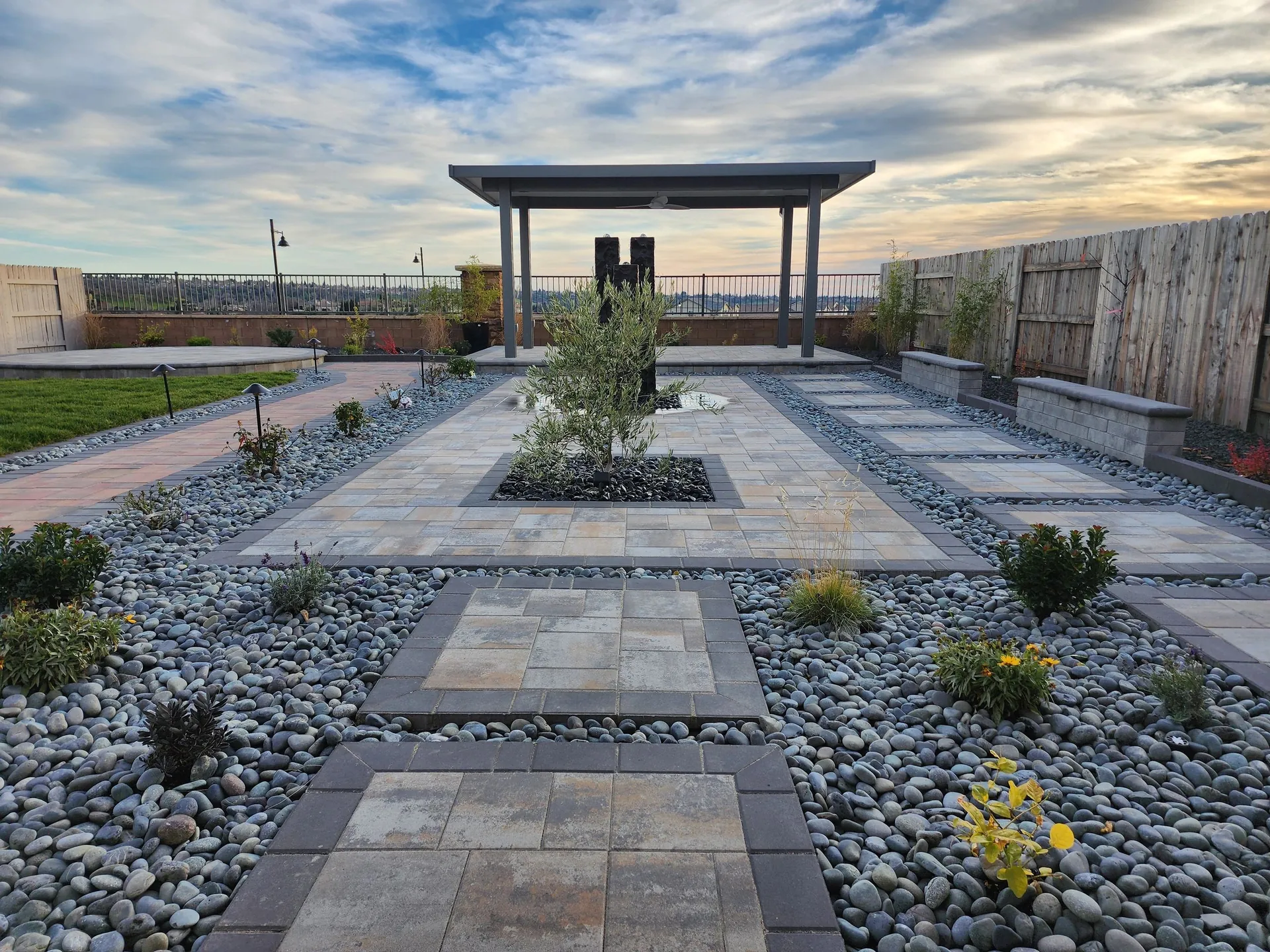
Shade is a design decision, not an afterthought
In the Sacramento Valley, the difference between a backyard you use and one you avoid for three months of the year usually comes down to shade. Summers here run past 100°F from June into September, and a beautiful patio in full western sun simply won't get used in the afternoon. Planning shade from the start — instead of bolting an umbrella on later — is what makes a yard livable in August.
Good shade design works on two fronts: built structures that give you reliable, immediate cover, and trees that grow into a cooler, softer canopy over time. The best backyards we build in Roseville, Folsom, and El Dorado Hills use both, placed deliberately around how the sun actually moves across the lot.
Start with the sun, not the structure
Before choosing a pergola or a tree, figure out where the heat lands. In our climate the punishing exposure is west and southwest — the late-afternoon sun from roughly 3 to 7 p.m. is what bakes a patio and radiates off walls and paving long after sundown. East-facing spaces get gentle morning sun and stay comfortable; north-facing areas sit in shade much of the day.
Spend time watching your yard, or have your designer map the sun path across the seasons. The goal is to put cover where you'll actually sit during the hottest hours, and to shield west-facing walls and glass that turn into heat sources. Orientation is free; getting it wrong is expensive to fix.
- West and southwest exposures need the most cover for afternoon and evening use
- East-facing patios stay usable with little or no added shade
- Shade west-facing windows and walls to cut radiant heat into the house
- Account for the low winter sun if you also want warmth in the cooler months
Built shade: pergolas, covers, and pavilions
Structures give you shade on day one and let you control exactly where it falls. The right choice depends on how much sun you want to block and whether you need rain protection too.
- Open pergolas filter light and define a space — pair with a canopy, vines, or tighter slats for real sun control
- Louvered, adjustable covers let you dial shade in, then open up for sun or ventilation
- Solid patio covers and pavilions give full shade and rain cover, extending the season on both ends
- Attached covers tie into the house and roofline; freestanding structures anchor a destination out in the yard
Build it on footings that last
Whatever the style, the part that matters most is below the surface. A patio cover or pergola is only as solid as its footings — properly sized, poured to depth, and connected so the structure stands up to wind and years of expansion and contraction in our clay soils. Cutting corners on footings is how covers end up leaning or pulling loose from the house.
We size and pour footings for the long haul, and detail flashing and connections so water never finds its way into the wood or back into the structure. Where a cover attaches to the home, that tie-in has to shed water and carry load correctly — it's the kind of detail you never see, and exactly the kind that determines whether the structure is still solid in fifteen years.
Living shade: trees that earn their place
Trees are the most effective cooling tool you can plant. A mature canopy noticeably drops the temperature beneath it and shades roof, walls, and paving in a way no umbrella matches. The trade-offs are time and placement: choose species suited to the Sacramento Valley's Zone 9b heat, and position them where the canopy will shade afternoon living areas as it grows.
Roots are the below-the-surface issue with trees the way footings are with structures. Plant a vigorous shade tree too close to a patio and its roots will eventually lift and crack the paving. Good design leaves room for growth, uses root barriers or generous setbacks near hardscape and pools, and plans irrigation so the tree thrives without undermining what's around it.
- Deciduous shade trees (Chinese pistache, red maple, London plane) block summer sun and drop their leaves to let winter warmth through
- Evergreens give year-round screening — and year-round shade — so use them more for privacy than for patio cover
- Keep large trees and aggressive roots a sensible distance from patios, pools, and the foundation
- Match each species to its mature size so it fits the space without constant pruning
Layering shade so the yard works in August
The most comfortable backyards don't rely on a single move. They layer a structure over the main seating area for guaranteed shade, add trees to cool the broader space and soften the architecture, and choose materials that don't fight the effort. Light-colored pavers, for instance, stay far cooler underfoot than dark concrete in full sun — a real consideration around pool decks and bare-foot zones.
Done together — and built on proper footings, grading, and drainage so nothing shifts or pools — these layers turn an unusable summer yard into the part of the house you actually want to be in from June through September. If you'd like a shade plan tailored to your lot's orientation and soil, we're happy to walk the site and map it out. Request a consultation and we'll show you where the shade needs to go and how to build it to last.