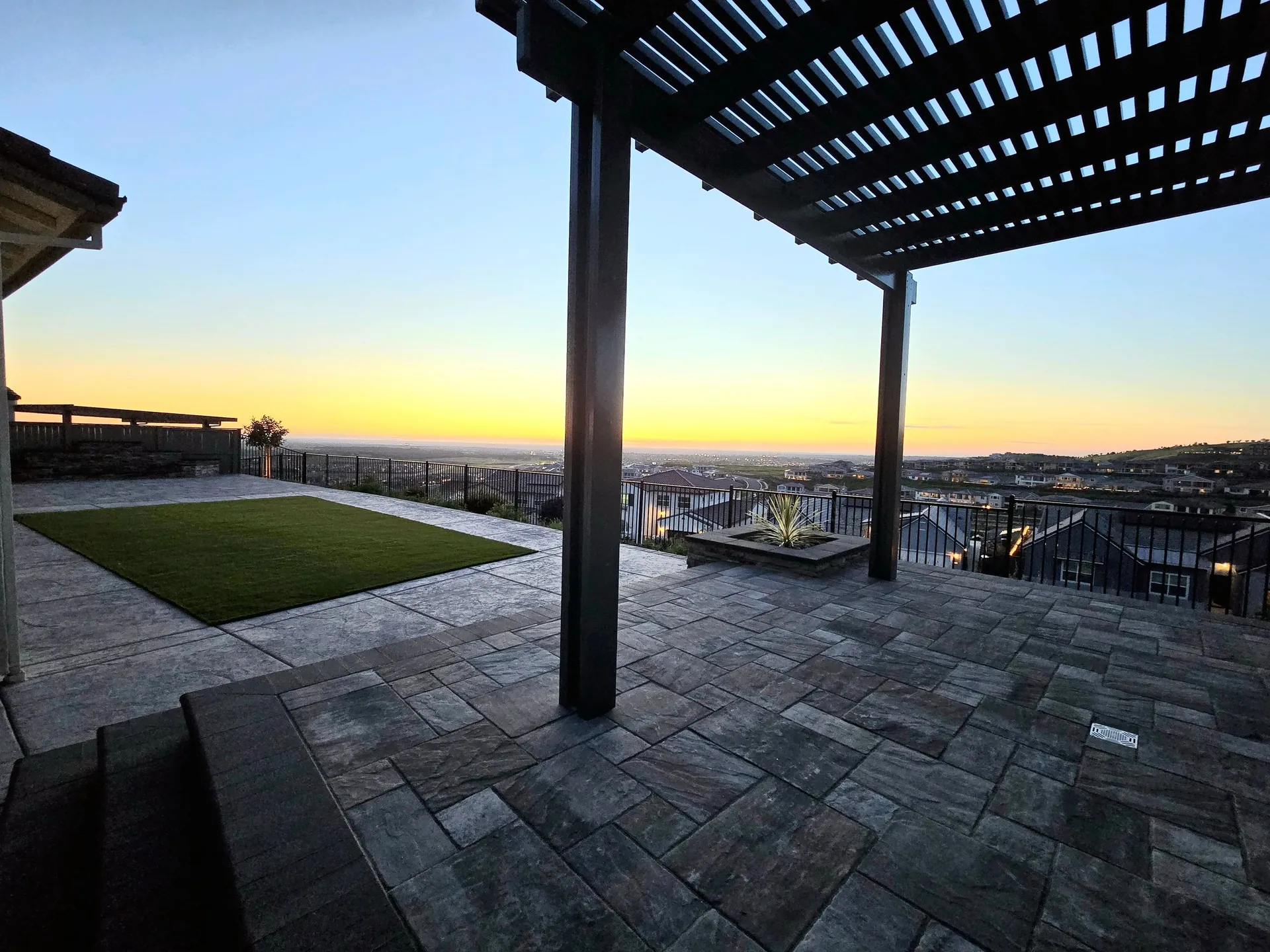
Why most outdoor living rooms go unused
The phrase outdoor living room gets used loosely, often to describe a patio with a sectional and a rug parked on it. The reason so many of these spaces end up storing furniture rather than hosting life is that they were styled like a photograph instead of designed like a room. A real living room indoors has a defined footprint, a focal point, comfortable seating arranged for conversation, light you can control, and a roof. Strip those away and you have an exposed slab that is too hot at 3 p.m., too dark at 8, and abandoned by November.
Building one you will actually use starts with treating it as architecture. It needs enclosure of some kind, climate control appropriate to where it sits, a reason for the eye to settle, and a layout that invites people to sit down and stay. In the Sacramento region, the climate part is not a finishing touch. It is the thing that decides whether the room works.
What follows is how those pieces come together, in roughly the order they should be decided.
A roof over your head: pergola versus patio cover
Enclosure overhead is what turns an open patio into a room, and the choice between a pergola and a solid patio cover sets the character of the whole space. They solve different problems, and the right answer depends on what you are protecting against.
An open pergola filters light into a comfortable dappled shade, keeps an airy, garden feeling, and supports vines, fans, and string lighting. What it does not do is stop a 105°F sun directly overhead or keep you dry in a December rain. A solid-roof patio cover, on the other hand, delivers full shade and weather protection, which is what makes a space usable in a hard summer afternoon or a wet Placer County winter, at the cost of some of that open feeling. Louvered or adjustable-pitch roof systems split the difference, opening for breeze and light and closing against sun or rain, though they sit at a higher price point.
Many Roseville, Granite Bay, and El Dorado Hills neighborhoods route any attached cover through HOA design review, which can govern roofline, materials, and color, so it is worth confirming guidelines before settling on a structure.
Climate control: heat for the shoulder seasons, cooling for summer
An outdoor room only earns daily use if it is comfortable across the calendar, and in our region that means solving for both a hot peak and cool edges. The Sacramento area swings from triple-digit summer afternoons to evenings that cool quickly once the Delta breeze arrives, then into a genuine rainy season. A room designed for one of those conditions sits empty during the others.
For warmth, a built-in fireplace, a gas or wood fire pit, or mounted radiant heaters extend the usable evenings well into spring and fall and make the room the natural gathering point after sunset. For the worst of summer, the tools are shade, air movement, and water: an outdoor-rated ceiling fan under a solid cover moves air across the seating, a misting system can drop the perceived temperature on extreme days, and a nearby water feature both cools and calms.
The combination is what counts. A covered room with a fan and a fire feature is comfortable across a remarkably wide slice of the year, which is exactly what separates a room you use from one you visit.
Furnishing and lighting it like a room
Once the structure and climate are handled, the room has to be furnished to invite sitting, not just to fill space. That starts with a focal point, usually the fireplace, a fire table, or a view, and seating arranged toward it and toward each other so conversation is easy. Deep-seat, fully upholstered furniture with quick-dry foam and solution-dyed acrylic fabric (the kind that shrugs off sun and spills) is what makes outdoor seating as comfortable as indoor, and it is the upgrade people notice most.
Materials should be chosen for our UV load. Powder-coated aluminum and teak hold up to relentless summer sun; cheaper frames chalk and fade within a couple of seasons. An outdoor rug defines the floor of the room and anchors the furniture, the same way it would inside.
Lighting is what lets the room live after dark. Layer it: ambient light from the structure or string lights overhead, task light where people read or eat, and accent uplighting on plants or walls for depth, all on low-voltage LED and ideally dimmable. Add weatherproof outlets and a few side tables so the space is practical, and the room stops being a showpiece and becomes a habit.
- Deep-seat cushions with quick-dry foam and solution-dyed acrylic fabric.
- Powder-coated aluminum or teak frames that take full Sacramento sun.
- An outdoor rug to define the floor and anchor the seating arrangement.
- Layered, dimmable LED lighting plus weatherproof outlets and side tables.
The groundwork that makes it last
A luxury outdoor room rests on work that never appears in the finished photos. The slab or paver field underneath needs a properly compacted base and grading that sheds winter water away from the seating and the house, or the floor cracks, settles, and puddles. A solid cover or attached structure needs footings and connections engineered for wind and, where applicable, a permit. Power for fans, lighting, and outlets, and gas for a fire feature, have to be run before the hardscape is finished.
Skip that groundwork and the most beautifully furnished room still develops a tilt, a puddle, or a crack within a few seasons. Sequence it correctly and the room holds its comfort and its looks for many years of Sacramento summers and winters.
If you want an outdoor living room that gets used every week rather than admired occasionally, anywhere across Roseville, Granite Bay, Folsom, the greater Sacramento area, and Placer County, send through your site photos, how you imagine using the space, any HOA guidelines, and a budget range. We will help turn it into a buildable plan and recommend the best first step.