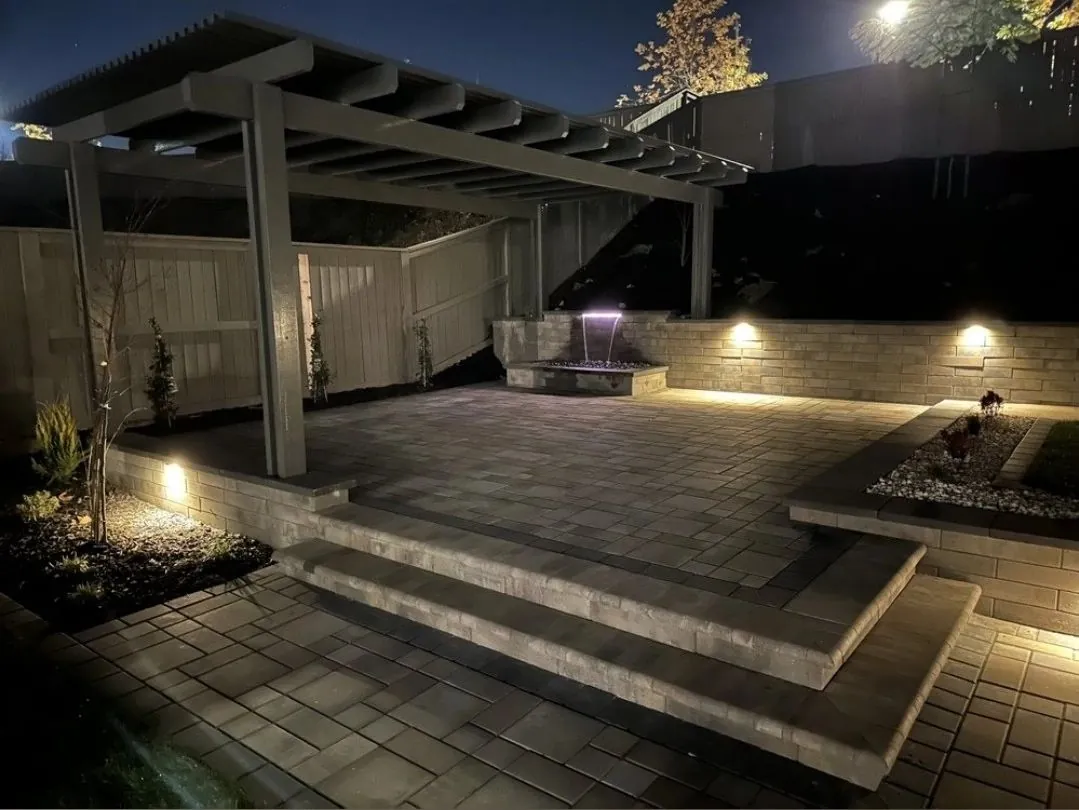
Two Good Products With Two Different Failure Modes
Pavers and stamped concrete are the two most common patio surfaces we are asked about in Roseville, Folsom, and El Dorado Hills, and both can produce a patio that looks excellent on day one. The real question is what each one looks like in year eight, and that comes down to how it is built and how it responds to the ground underneath it.
Stamped concrete is a single rigid slab with a pattern pressed into the surface. Pavers are hundreds of individual units sitting on a compacted base, locked together by edge restraint and joint sand. That one difference, rigid versus flexible, explains nearly everything else in this comparison.
How Each Handles Sacramento and Placer Clay
Much of our service area sits on expansive clay. It swells in the wet months and shrinks through the long dry summer, and anything built on it moves a little every year. A rigid concrete slab cannot flex with that movement, so it relieves stress by cracking. Control joints help steer where cracks go, and good base prep reduces how much the slab moves, but on clay, some cracking over time should be considered normal rather than a defect.
A paver system is designed to move. Individual units can shift slightly with the soil and still look right, and because the base is compacted aggregate rather than a monolithic slab, it tolerates seasonal change far better. The trade-off is that pavers are only as good as the base under them. Skimp on excavation depth, compaction, or edge restraint and you get settling and spreading instead of cracks.
Cost Up Front and Over the Life of the Patio
Installed properly, stamped concrete usually comes in below pavers on the initial bid. There is less labor in placing and finishing a slab than in laying, cutting, and compacting individual units, and the paver units themselves cost more per square foot than the concrete in a slab.
The gap narrows over time. Stamped concrete needs resealing every few years to hold its color and resist stains, and if it cracks badly or heaves at a joint, the realistic fix is demolition and replacement of the affected section, which rarely matches the original color and texture. Pavers cost more to install, but the maintenance is lower and the repairs are simple. Think of the decision as paying more now for a surface that is cheaper to own, or paying less now for one that will ask more of you later.
Repairs, Utilities, and Everyday Maintenance
Repairability is where pavers win decisively. If a drain line fails under the patio, an irrigation valve needs replacing, or a tree root lifts a corner, we pull the affected pavers, fix the problem, re-compact the base, and set the same pavers back. The repair disappears. With a slab, the same problem means a saw cut, a patch, and a visible seam for the life of the patio.
Day-to-day care differs too:
- Stamped concrete: reseal on a regular cycle, watch for surface flaking in high-traffic spots, and expect color to soften with sun exposure
- Pavers: occasionally top up polymeric joint sand, pull the rare weed from a joint, and pressure wash as needed
- Both: keep irrigation overspray off the surface to limit efflorescence and mineral staining
Look, Feel, and Summer Heat
Stamped concrete can imitate flagstone, slate, or wood plank in one continuous surface, and some homeowners prefer that seamless look. The limitation is that the pattern repeats, and the color is a surface treatment that wears unevenly where chairs drag and feet travel.
Pavers offer genuine texture and a wide range of sizes, finishes, and blends, from clean large-format slabs to tumbled cobble. Lighter colors and textured finishes stay noticeably cooler underfoot in a Sacramento August than dark, sealed concrete, which matters around pools and barefoot zones. If a specific look drives your decision, bring samples outside and feel them at three in the afternoon in July before you commit.
Which One We Recommend, and When
For most backyard patios in our area, we steer homeowners toward pavers. They handle our soils better, they are repairable, and they age gracefully. Stamped concrete still makes sense for tight budgets, for large plain areas where a seamless surface is the goal, or where the slab is poured over well-prepared, stable ground with realistic expectations about cracking.
Whichever you choose, the money that matters most is spent below the surface: proper excavation, compacted base, and drainage that moves water away from the house. If you are weighing pavers against stamped concrete for a patio in Roseville, Granite Bay, El Dorado Hills, or anywhere in the Sacramento area, request a consultation and we will walk your site and give you a straight answer for your soil, budget, and goals.