Signs Your Slope Is Asking for a Wall
Sloped lots are the norm in El Dorado Hills, Cameron Park, Auburn, and the hillier parts of Granite Bay and Loomis, and a slope by itself is not a problem. The trouble starts when the slope is doing something you did not plan for. Soil that washes onto a patio or down a driveway after a storm, mulch that will not stay put, a fence line that leans a little more each year, bare ground where nothing will establish, or a grade that drains toward the house instead of away from it are all signs the slope needs to be held, not just planted.
The other common reason is simpler: the slope is wasting space. A yard that is a third unusable hillside becomes a flat lawn, a patio, or a garden terrace once a wall takes the grade change in one or two deliberate steps.
What a Retaining Wall Is Really Holding Back
A retaining wall resists two forces. The first is the weight of the soil behind it, which pushes outward and increases with height. The second, and the one that destroys most failed walls, is water. When clay soil behind a wall becomes saturated during a wet Sacramento winter, the pressure against the wall climbs sharply. Walls that were adequate for dry soil bow, crack, or tip when that happens.
Anything sitting above the wall adds load as well. A driveway, a pool, a structure, or even another wall stacked too close behind adds what engineers call a surcharge, and that changes how the wall must be built. This is why a wall is a structural decision first and a design element second.
Wall Types That Hold Up in Our Soils
We build several wall systems, and each has a place:
- Segmental retaining wall block: interlocking concrete units on a compacted gravel base, often with geogrid reinforcement layered into the backfill for taller walls. Durable, flexible, and the most common choice for residential grade changes
- Masonry block with veneer: a reinforced CMU wall on a concrete footing, finished in stucco, stone, or brick to match the house. Best where the wall also serves as a seat wall, planter, or architectural feature
- Poured concrete: the strongest option for tall or heavily loaded walls, usually engineered, and often finished with veneer or board-form texture
- Natural boulder walls: well suited to the granite and oak character of Auburn and Loomis, with careful placement and drainage behind them
Drainage Behind the Wall Is Not Optional
Every wall we build gets the same drainage assembly regardless of type: clean drain rock directly behind the wall, a perforated drain pipe at the base of that rock sloped to a daylight outlet or a proper drainage system, filter fabric separating the rock from the native clay so fines cannot clog it, and weep holes or outlets where the design calls for them. The purpose is to let water through the wall instead of building up behind it.
Backfilling a wall with native clay and no pipe is the single most common shortcut we see in failed walls around the region. It saves a little material on installation day and costs a full rebuild a few winters later.
When Engineering and Permits Are Required
Under the California Building Code, retaining walls above a certain height, commonly four feet measured from the bottom of the footing to the top of the wall, generally require a building permit and an engineered design. Shorter walls can also require engineering when they support a surcharge such as a driveway, slope, or structure, or when walls are terraced close enough together to act as one. Placer, El Dorado, and Sacramento County each apply these rules through their own permit process, and some HOAs add their own height limits on top, so confirm the requirement for your address before building.
Engineering is not a formality. On the steep decomposed-granite and clay slopes of El Dorado Hills, a geotechnical look at the soil and a stamped design determine footing size, reinforcement, and drainage. We coordinate the engineer, the permit, and the inspections as part of the project so the homeowner is not managing three parties.
Designing Terraces, Not Just Walls
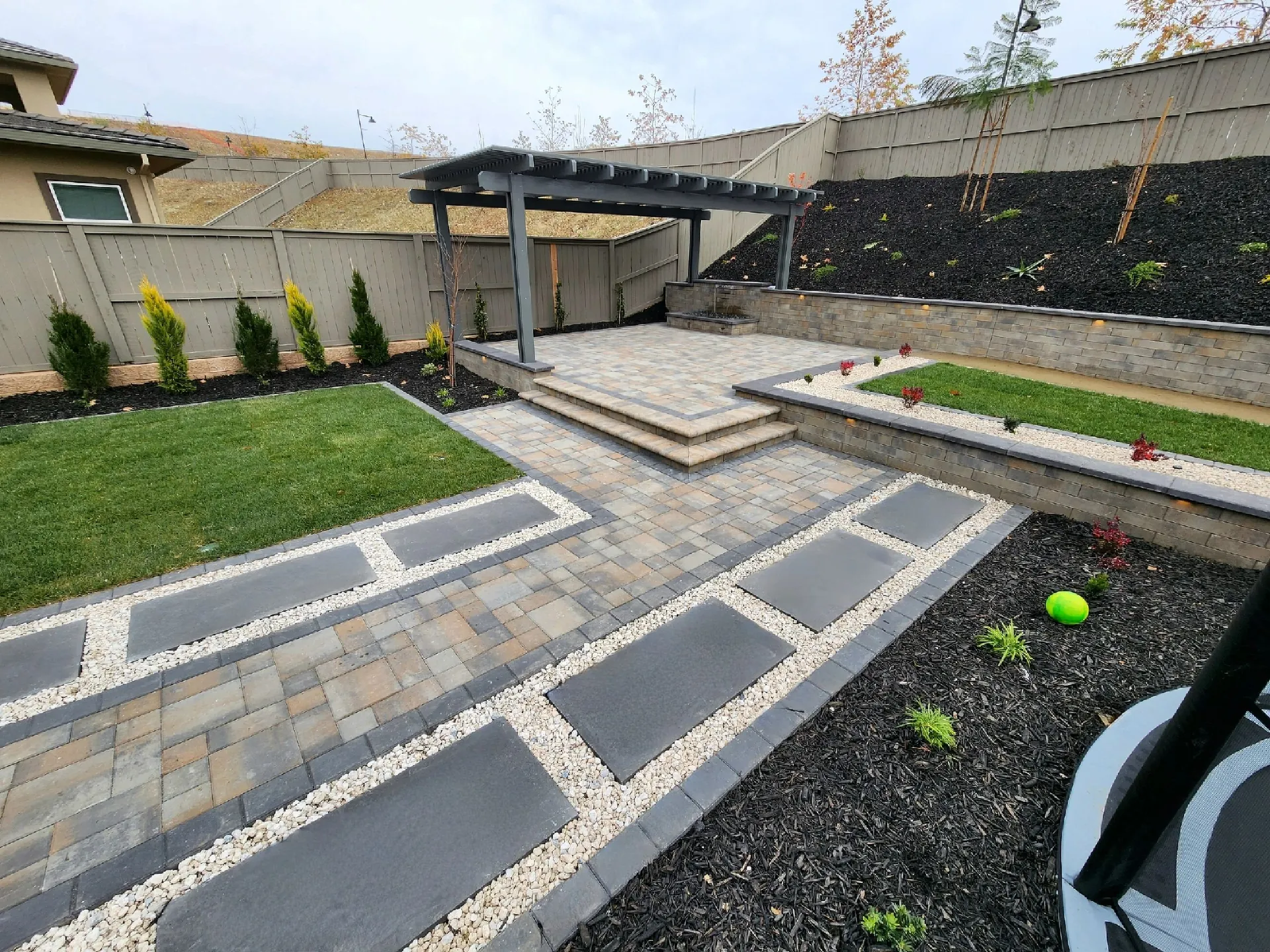
The best sloped-yard projects rarely use one tall wall. Two or three lower terraces with planting between them cost less to engineer, feel more natural, and create usable levels for a patio, a lawn, and a garden. Steps, lighting, and seat-height walls can be worked into the same structure so the grade change becomes the feature of the yard rather than something to hide.
If your yard in El Dorado Hills, Auburn, Granite Bay, or anywhere in the Sacramento area has a slope that is eroding, leaning a fence, or simply going unused, request a consultation. We will assess the grade, the soil, and the water, and show you what it takes to hold it properly for the long term.